Ancient Rome · March, AD 59
A Ship Built to Sink
Nero waves his mother off on a ship built to come apart
look closer
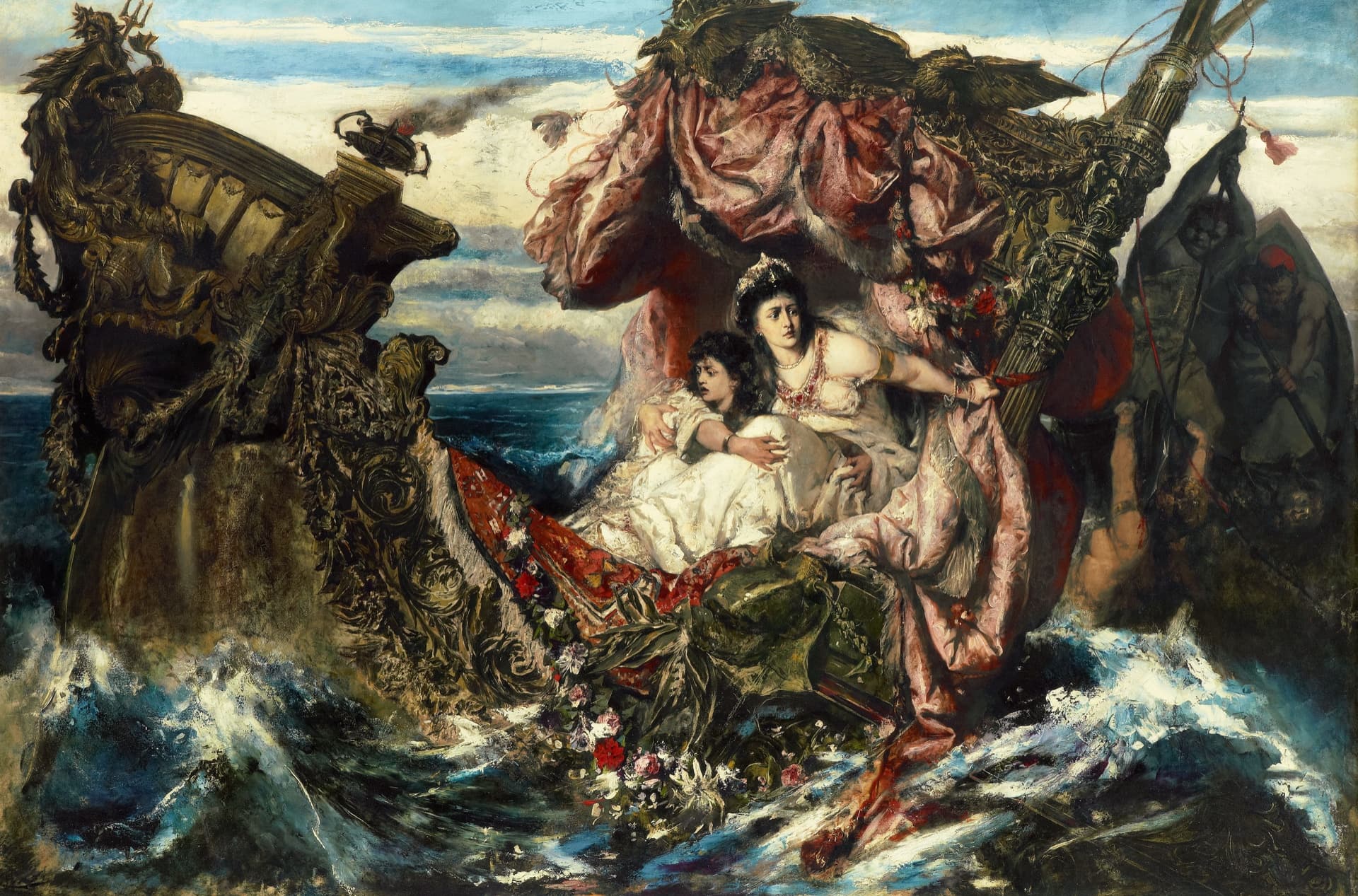
A woman in the water is still wearing her crown. She is Agrippina, and she holds the companion Tacitus names Acerronia with one arm while the other reaches for a handhold. She came ashore with one wound in her shoulder and said nothing at all.
The festival of Minerva, March of the year 59, and the emperor is entertaining his mother on the bay at Baiae. Nero is 21. Agrippina raised him to the throne through a marriage, an adoption, and, most of Rome assumed, a plate of mushrooms that removed her husband the emperor Claudius. She has spent the years since reminding her son where he came from. Tonight he cannot be warm enough. The dinner runs long, and at the shore he holds the goodbye, pressing his lips to her breast; Tacitus could not decide whether that was the crown of the performance or the last true thing. The night is windless and bright with stars, the sea flat, as if, Tacitus adds, the gods wanted the crime witnessed. The ship is the work of Anicetus, a freedman who commands the fleet at Misenum and hates Agrippina on his own account. Assassins can be questioned; a shipwreck cannot. So the canopy over the stern couch has been loaded with lead and rigged to fall. Partway across the bay it falls, and kills Crepereius Gallus, standing near the helm, on the spot. Agrippina and her companion Acerronia are saved by the couch itself, whose high sides catch the weight. Then the design fails: the hull will not break apart. The crewmen in on the plot throw their weight to one rail to capsize her. The crewmen who are not push back the other way. The ship rolls the two women into the sea rather than crushing them. In the water Acerronia makes the intelligent, fatal calculation that rescue comes fastest for the emperor's mother, and cries out that she is Agrippina. The crew beat her dead with oars and boat poles. Agrippina, one wound in her shoulder, concludes the opposite and says nothing. She is the daughter of Germanicus; she grew up in army camps. She swims until she meets fishing boats, and is landed at the Lucrine lake. From her villa she makes the coldest move left on the board. She sends a freedman to tell her son that by the gods' kindness she has survived an accident, and that he should not trouble to visit yet. She knows. He must not learn that she knows. It buys her a few hours. Nero, past panic, throws a sword on the floor at her messenger's feet and announces the man came to kill him. That gives him the charge he needs. Anicetus goes to finish what his ship could not, with marines this time. Tacitus gives her one last order, to the centurion drawing his blade: strike the womb that bore him. The Senate answered the news with public thanksgiving. Wertheimer painted the gilded barge folding like stage scenery, Agrippina still crowned in the wreck of the awning with the terrified girl in her arms. The banquet garlands from the farewell dinner go over the side with the drapery. He changed the one thing Tacitus made a point of: the flat, starlit night becomes daylight and a running sea.