The Age of Sail · 19 August 1812
Her Sides Are Made of Iron
A British broadside bounces, and a nickname is born
look closer
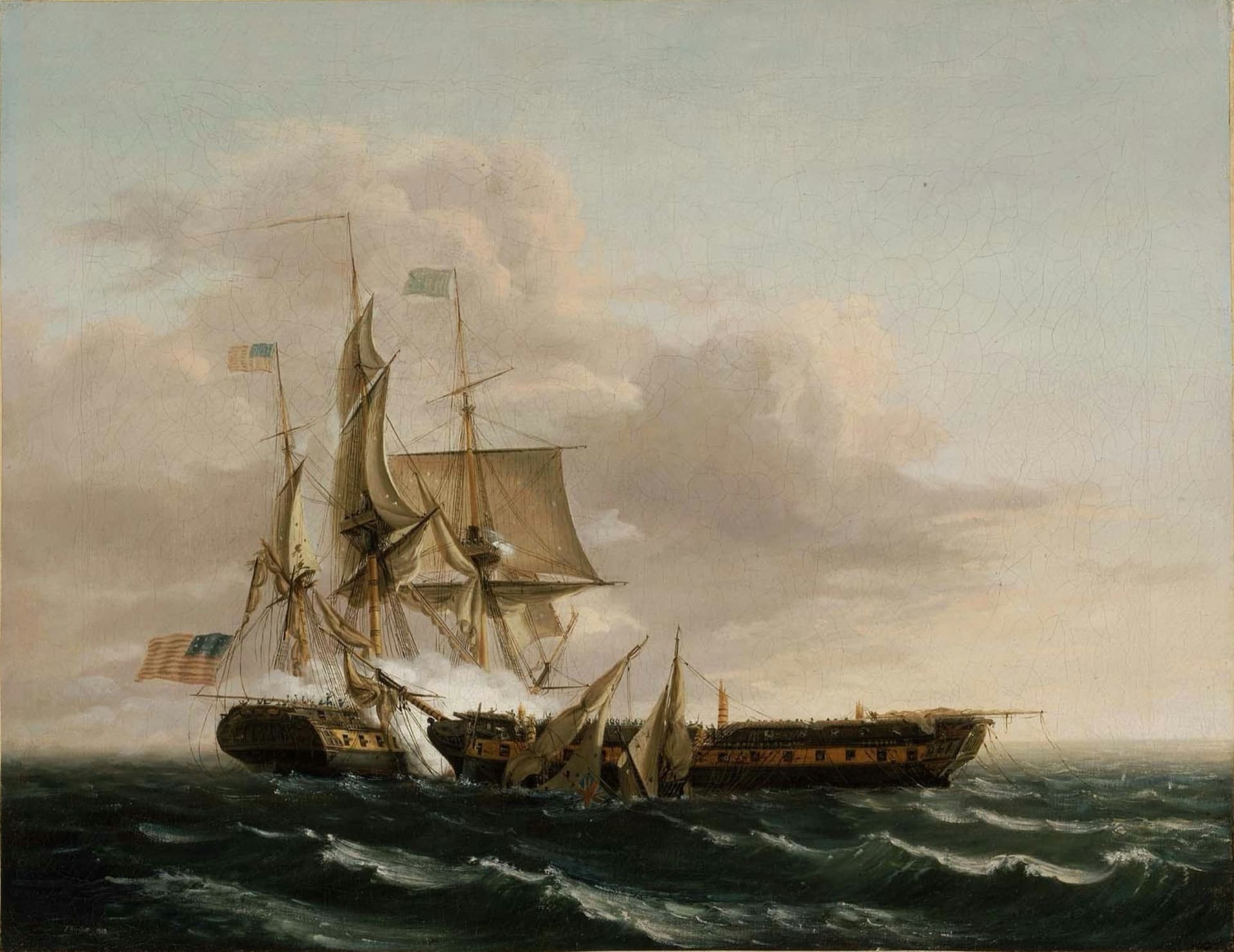
Constitution with her ensign still up and her guns going, the smoke lying along her side. Isaac Hull took two miles of British broadsides without answering before he opened fire at half-pistol-shot.
In August 1812 the Royal Navy had not lost a single-ship frigate action in anyone's living memory, and the war with America was expected to add to the record. On the afternoon of the 19th, 750 miles east of Boston, HMS Guerriere, 38 guns, sighted a big American frigate and cleared for action with something like appetite. Her captain, James Dacres, had reportedly promised his crew the fight would take 15 minutes. The ship coming down on him was USS Constitution, 44 guns, one of the six oversized frigates the young republic had built in the 1790s. She was longer, heavier and thicker-planked than anything in her class, with a hull of southern live oak on a frame so dense the Royal Navy had no category for it. The education took 35 minutes. Captain Isaac Hull held his fire through two miles of closing under British broadsides, took the punishment in the rigging, and laid Constitution alongside at half-pistol-shot before answering with everything at once. A British 18-pound ball struck the American hull and dropped whole into the sea, and a sailor shouted the line that renamed the ship: Huzzah! her sides are made of iron! Guerriere's mizzenmast went overboard, dragging her around; the ships fouled; and when they wrenched apart her foremast and mainmast followed, leaving the pride of the blockade rolling mastless in the swell. Dacres, wounded, was asked by the boarding lieutenant whether he had struck his colors, and managed the last good joke available: strictly speaking, there were no colors left standing to strike. The wreck was too broken to bring home, so Hull's men took off the prisoners and burned her at sea the next morning. The material result was one middling frigate; the moral result was out of all proportion. Boston gave Hull a parade and Congress struck medals. London, which had absorbed the news of wars on three continents with composure, took this one badly, and the Admiralty eventually told its frigate captains not to engage the American 40-fours alone. Two more Royal Navy frigates were beaten by Christmas, which did not calm the newspapers. Thomas Birch, Philadelphia's marine painter, had the scene on canvas within the year: Constitution steady under her ensigns, Guerriere a shorn hulk with her masts in the water, the sea running indifferent green under both. The nickname the cannonball coined outlived everyone in the smoke. Old Ironsides is moored in Boston harbor today, the oldest commissioned warship still afloat, her sides, as ever, made of oak.