The Viking Age · 8 June 793
The Sea Wolves of Lindisfarne
Dragon-prowed ships find the holy island undefended at dawn
look closer
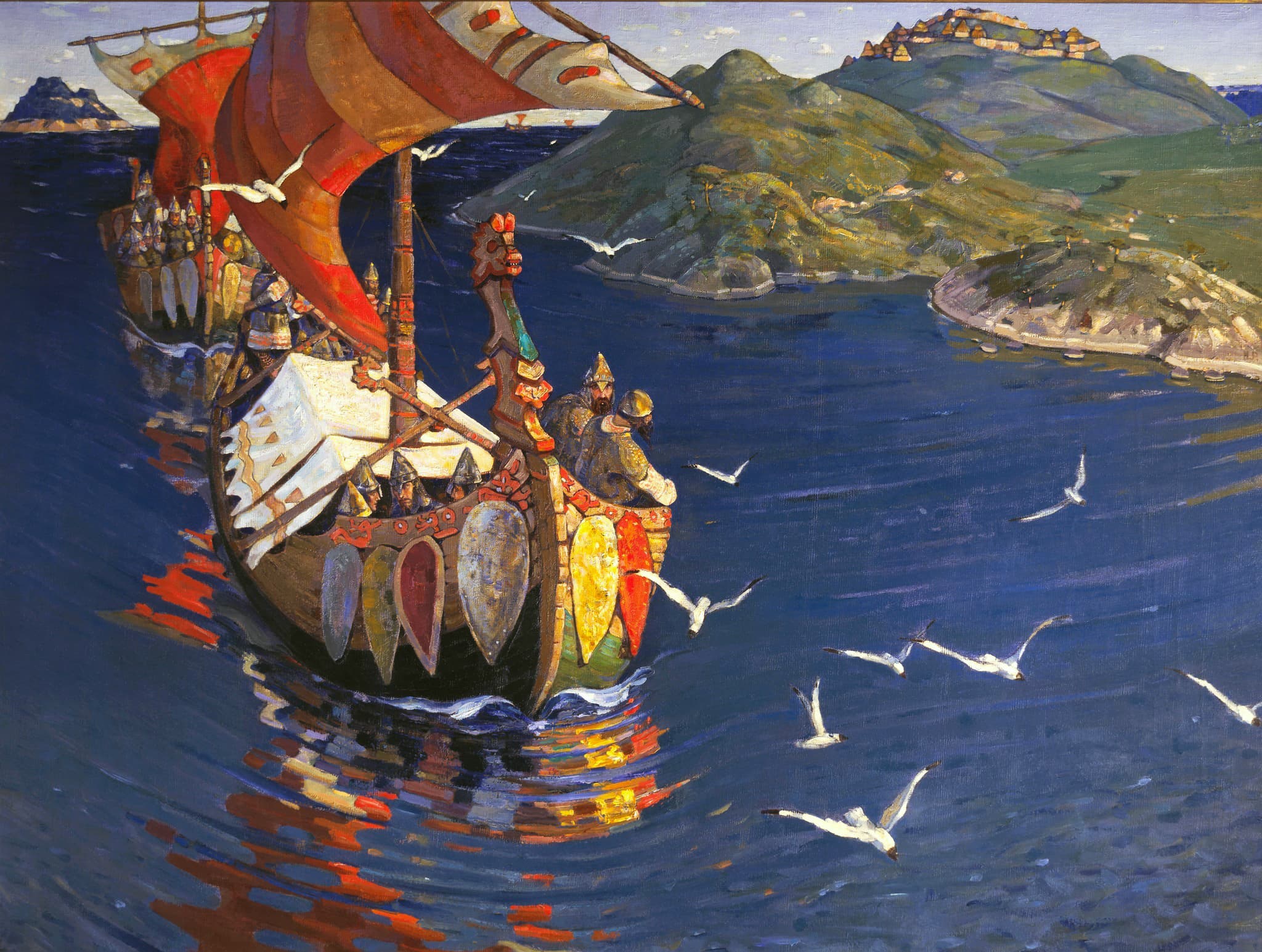
A carved beast head rides the tall prow with its mouth open over the helmets below. Icelandic law later told crews to take these heads down before they came in sight of home, so the land spirits would not take fright.
The year began with omens, and the monks wrote them down: immense whirlwinds over Northumbria, sheets of lightning, and what the Anglo-Saxon Chronicle records, without blinking, as fiery dragons flying in the air. A famine followed. Nobody connected any of it to the sea. The island is famous for two things: the painted gospel book its monks made, and the fact that no one has ever needed to defend it. Lindisfarne sits off the Northumbrian coast, reachable twice a day when the tide uncovers the causeway and cut off the rest of the time. For over a century it has been the holiest ground in the north, because Cuthbert is buried here, and kings who fear nothing else fear Cuthbert. Pilgrims bring silver. The silver stays on the altar, because nobody has ever come for it. This morning the monks at matins hear gulls, then oars. Ships with carved serpent heads are riding the high tide straight onto the beach, which no trading vessel does. The men who leap out move through the priory with terrible efficiency: altar silver, jeweled bindings, the young monks who will fetch a price in the north. Some of the brothers are killed in the doorways. Others are driven into the sea to drown. It is over before the tide turns. The ships go out the way they came, heavier. The news travels at the speed of a frightened rider. It lands hardest at the court of Charlemagne, where a Northumbrian scholar named Alcuin runs the palace school. He writes to the survivors what everyone is thinking: never before has such terror appeared in Britain, and no one believed an attack from the sea was even possible. The church of St Cuthbert, he writes, is spattered with the blood of the priests of God and stripped of its ornaments. Then, being a schoolmaster, he cannot help adding that the monks should consider whether their own sins invited this. The men in the serpent ships considered nothing. They had found a business model: wealth, undefended, on a coastline with no navy, and the same tide that exposed the causeway would cover their retreat. What the raiders could not sell, they left, and one of the things they left is the point of the story. The great gospel book of Lindisfarne was written and painted around 715 by a single monk named Eadfrith. He built about 90 colors out of 6 local minerals and plants, and the book came through the morning untouched. When the community finally abandoned the island three generations later, the monks carried two things over the causeway: Cuthbert in his coffin and the book. They walked Northumbria with both for 7 years before stopping at Chester-le-Street. Durham came more than a century after that. The raids they were fleeing went on for two and a half centuries and redrew every map they touched. The book outlasted all of it. It sits today in the British Library, unburned, every page Eadfrith painted still in place.