The Age of Sail · 29 November 1781
Typhoon Coming On
Turner hangs a mass murder in the Royal Academy and calls it weather
look closer
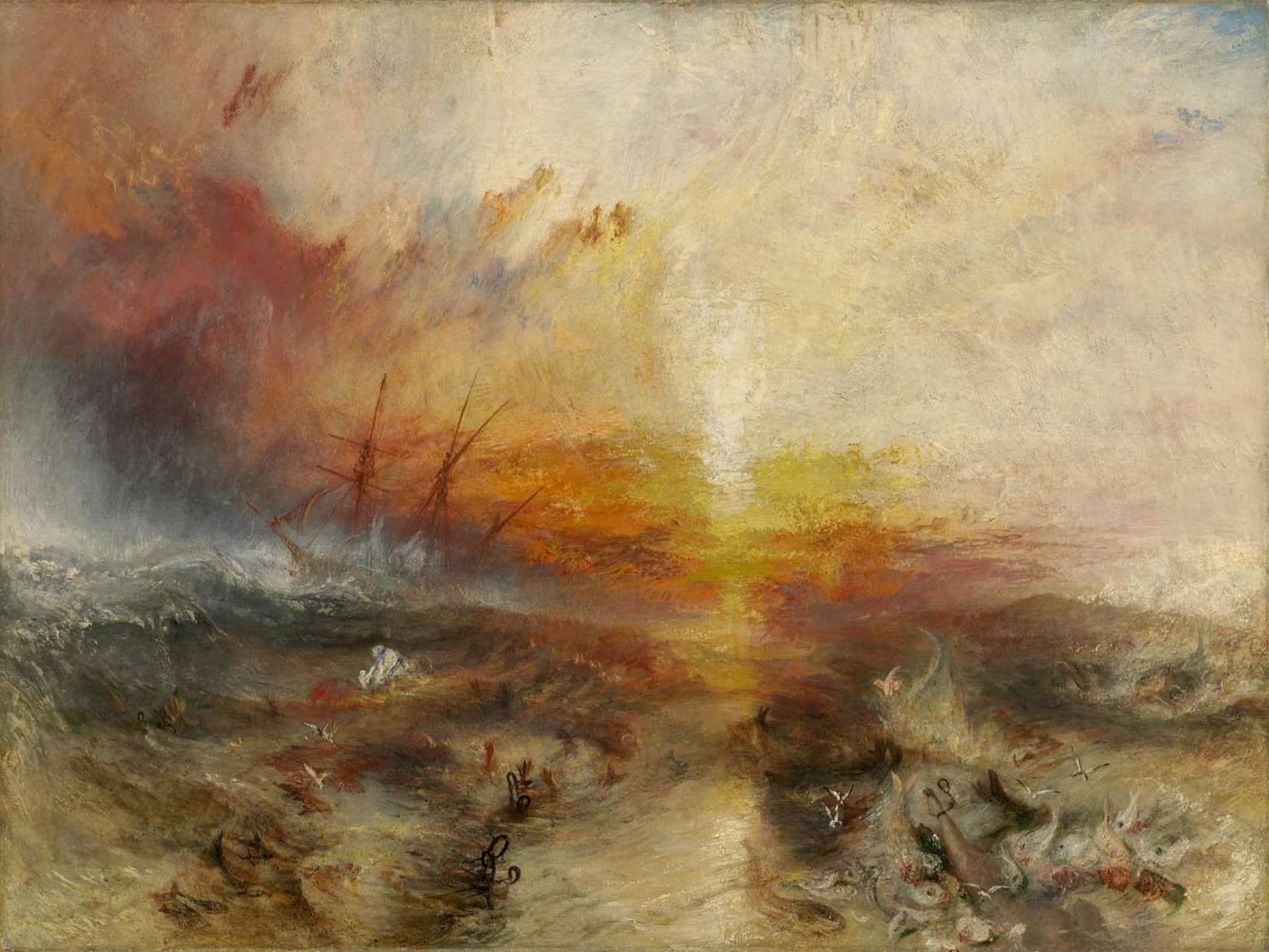
A leg goes down foot first, the shackle and its chain painted blacker and harder than anything else in the water. Fish are already at the foot; the gulls are coming down on the rest.
The ship was called the Zong, out of Liverpool, and in the autumn of 1781 she was carrying 442 enslaved Africans, roughly twice what a vessel her size could keep alive. Navigation errors stretched the crossing; water ran short; and between 29 November and 1 December the crew threw 132 living people overboard, in batches, over several days. Ten more jumped. The reason was written down without shame, because it was an accounting decision. Enslaved people who died of thirst or sickness were the owners' loss. Cargo thrown overboard to save the ship was covered by the insurers, at 30 pounds a head. England learned all this because the insurers declined to pay. The case that followed, Gregson v Gilbert, 1783, was a commercial dispute; the killings figured as a question of average adjustment. A jury found for the owners. On appeal, Lord Mansfield granted a retrial with a sentence that has never stopped being quoted: the case was the same as if horses had been thrown overboard. The insurers did not pay in the end. No one, then or ever, was charged with murder. The freed slave Olaudah Equiano brought the case to the abolitionist Granville Sharp, who spent years pressing for a prosecution and failed. What Sharp could do was make sure nobody was allowed to forget. The Zong became the abolition movement's founding atrocity, the thing the pamphlets meant when they said the trade was not commerce but crime. Turner painted it 59 years later, in 1840, timing the canvas for the Royal Academy wall in the summer London hosted the World Anti-Slavery Convention. He had been reading Thomas Clarkson's history of the trade, and he attached to the frame his own verses about hope and typhoons. The title performs the ship's own bookkeeping: Slavers Throwing Overboard the Dead and Dying, Typhoon Coming On, the murder tucked into a participle, the weather given top billing. In the picture the sun bleeds out into a coming storm and the slaver's masts lean away toward the horizon. The foreground comes clear only slowly: hands, a shackled leg going under, gulls and sea creatures arriving. The manacles are painted with more precision than anything else in the water. Ruskin's father bought it for him, and Ruskin wrote the most famous page of praise in English art criticism about this canvas, with the subject demoted to a footnote. He lived with it for 28 years and then sold it, admitting the picture had become too painful to keep. It crossed the Atlantic, the direction the Zong had sailed, and hangs now in Boston, where the label, unlike the title, says murder.