The Renaissance · 19 May 1536
A Little Neck
The queen jokes with her jailer about the width of a blade
look closer
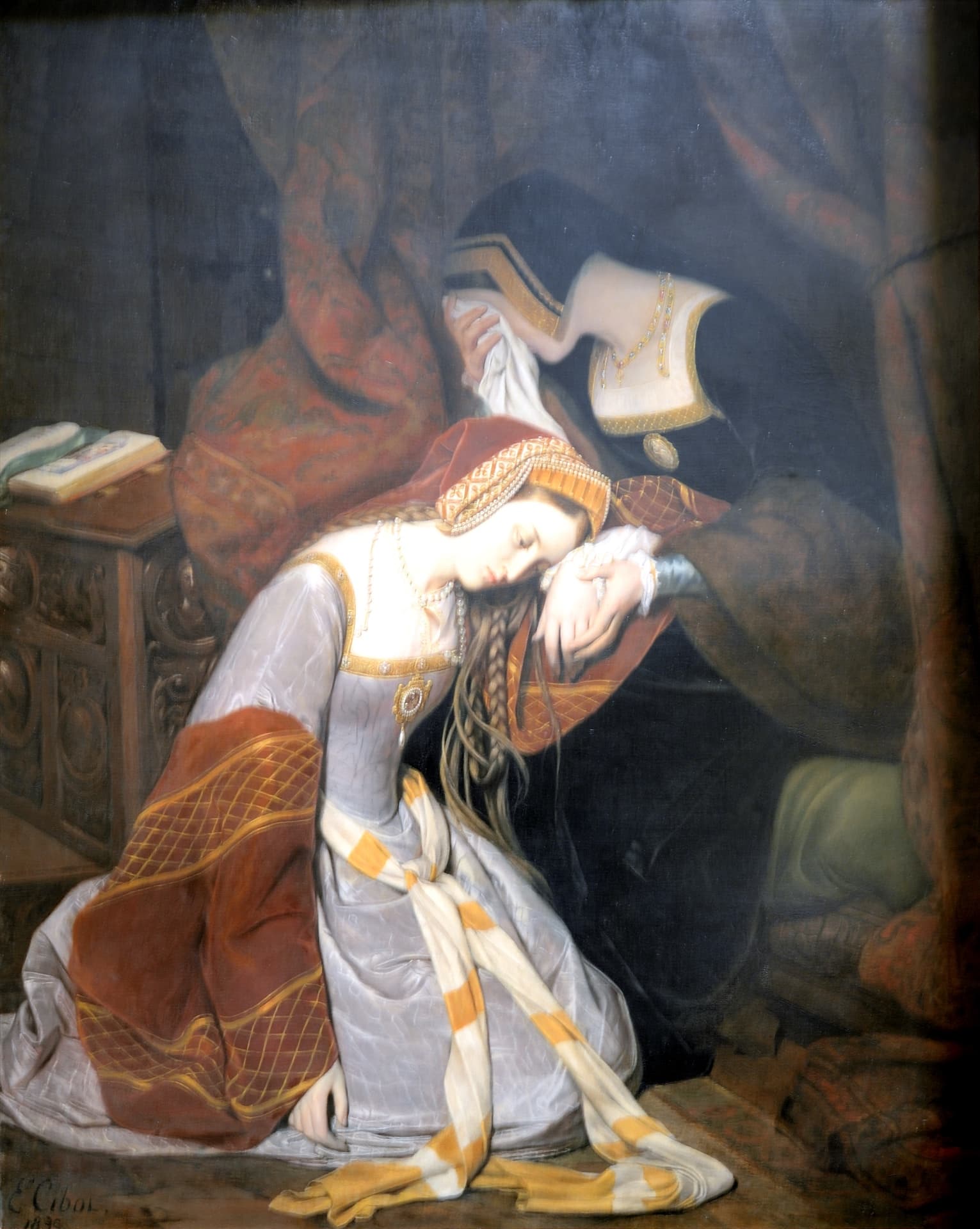
Cibot gives her shut eyes and a hand under her cheek. William Kingston ran the Tower, and he wrote down the other half. Anne put her hands round her own throat and laughed about how little a neck it was.
The charges were adultery with five men, one of them her brother, and plotting the king's death, and almost nobody, then or since, has believed them. Anne Boleyn's real offenses were slower ones: a daughter instead of a son, and a miscarriage in January on the day of her predecessor's funeral. There was a temper too, charming in a mistress and disobedience in a wife, and a king already writing letters to Jane Seymour. Thomas Cromwell assembled the case in three weeks. Of the five accused men only the musician Mark Smeaton confessed, after a night in Cromwell's house that no one describes, and the court that condemned her sat under the presidency of her own uncle. A jury of peers found her guilty unanimously, several of them weeping, and Cromwell had sent to Calais for an expert swordsman before the trial opened, the verdict being, evidently, not in suspense. In the Tower she swung, her jailer William Kingston wrote, between desolation and a strange lightness. His letters preserve her best line. Told that the executioner was very good, and that the pain would be little, she answered that she had heard he was excellent. And I have a little neck, she said, putting her hands around it, laughing. Kingston, a professional in these matters, wrote to Cromwell that he had seen many men and also women executed. All of them had been in great sorrow, he said, but this lady had much joy and pleasure in death. On the morning of 19 May 1536 she made the conventional speech on the scaffold, praising the king as a gentle and sovereign lord. Convention was the last shield of a mother whose daughter remained in his power. She knelt upright in the French fashion. The swordsman from Calais, by a professional's mercy, called out to his assistant as if the sword were elsewhere. He took the head while she was still listening for footsteps. No coffin had been ordered. She was buried in an arrow chest under the chapel floor a few yards away. The king was betrothed to Jane Seymour the next morning and married inside a fortnight, and the daughter with the disappointing sex ruled England for 44 years. Cibot painted her in 1835 in the Tower with her attendant, all satin and collapse, and titled it for the first moments of her arrest: the romantic century's favorite kind of queen, young and wronged. It hung at the Salon that year and is at Autun now.