The Renaissance · 18 July 1573
Change the Title
The Inquisition orders a repaint; the painter reaches for a pen
look closer
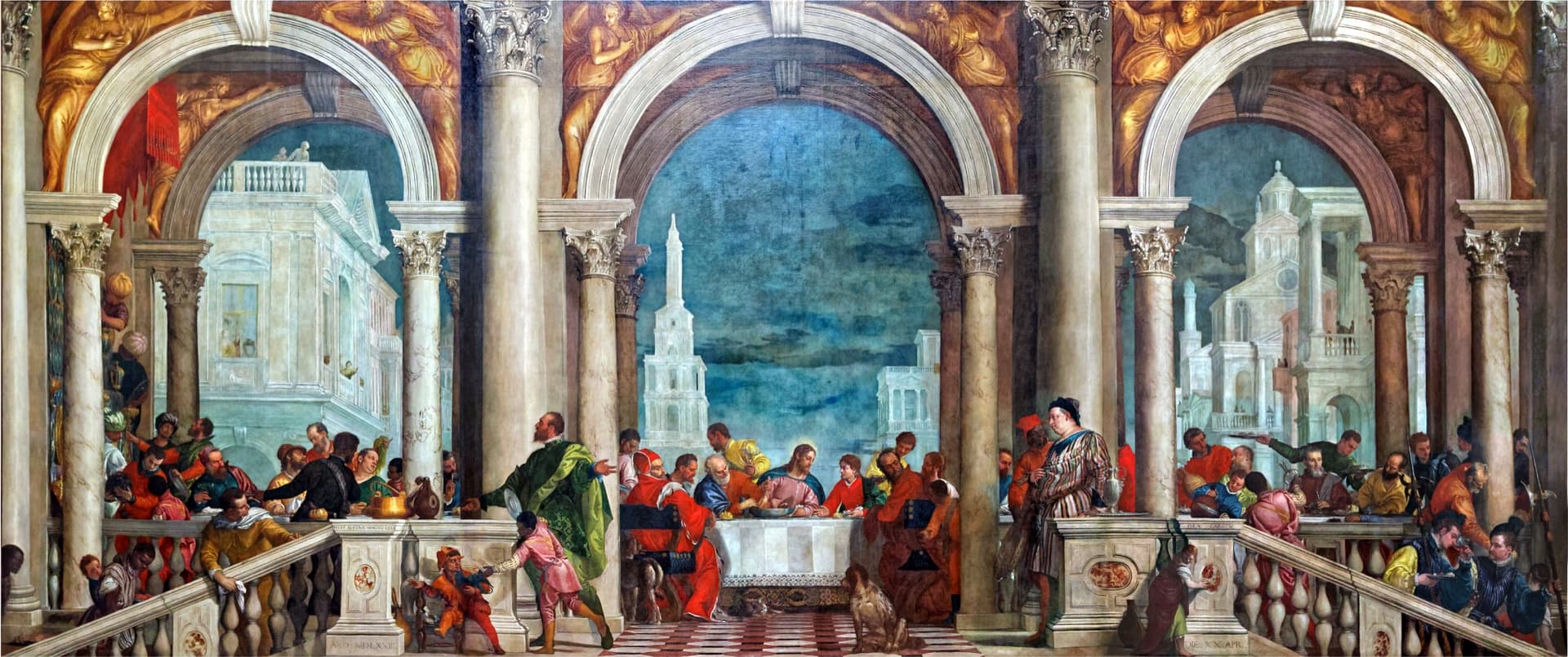
A buffoon holds a parrot on his fist. The tribunal asked about him by name, and Veronese answered that he is there as an ornament. The Latin cut into the stone rail above him is a line from Luke: Levi made him a great feast.
The commission was a Last Supper for the refectory of Santi Giovanni e Paolo in Venice, replacing a Titian lost to fire. Veronese delivered it in April 1573 at the scale he preferred: 42 feet of marble arcade, with Christ at a banquet in the middle of what is unmistakably a rich Venetian party. Three months later he was summoned before the Holy Office. The transcript of the hearing, 18 July 1573, survives, and it is the best comic dialogue of the sixteenth century, because the inquisitors ask exactly the questions any bewildered viewer might. What is the meaning of the man with the bloody nose? Of the armed men dressed as Germans, each with a halberd in his hand? Of the jester with the parrot on his fist? Could the dog not be replaced with a Magdalen? Does it seem suitable to you, they ask, to paint buffoons, drunkards, Germans, dwarfs and similar indecencies at the Lord's last supper? Veronese's defense has been quoted by artists ever since: we painters take the same license that poets and madmen take. The canvas was large, he explained, and had room that needed filling. The halberdiers were a rich host's servants, one drinking and one eating at the foot of the stairs but both ready to do their duty. He had been paid to ornament the picture as he saw fit. Pressed on whether it was fitting, he allowed that he had perhaps not thought everything through. The tribunal ordered him to correct the painting within three months, at his own expense, in whatever manner the judges should decide was needed. He corrected nothing. Instead he wrote on the balustrade, in neat Latin, a new title: the Feast in the House of Levi, with chapter and verse, Luke 5. At Levi's dinner, scripture itself seats Christ among publicans and sinners, the disreputable crowd being the theological point; every German, jester, dwarf and dog in the picture instantly became doctrinally load-bearing. The Inquisition accepted the edit. Nothing on the canvas changed but the words, and the words changed everything the canvas meant. The painting hangs today in the Accademia, its inscriptions still legible on the stonework: Luke's chapter and verse on the right-hand balustrade, the date on a pedestal at the left. Art historians treasure the affair as the cleanest recorded victory of retitling over repainting. The transcript keeps its last small joke: the tribunal that could order any image in Venice destroyed spent an afternoon trying to talk a painter into swapping a dog for a Magdalen, and lost.