The Machine Age · 28 October 1886
The Lady in the Fog
A gift unveiled in rain, with a boatload of women objecting offshore
look closer
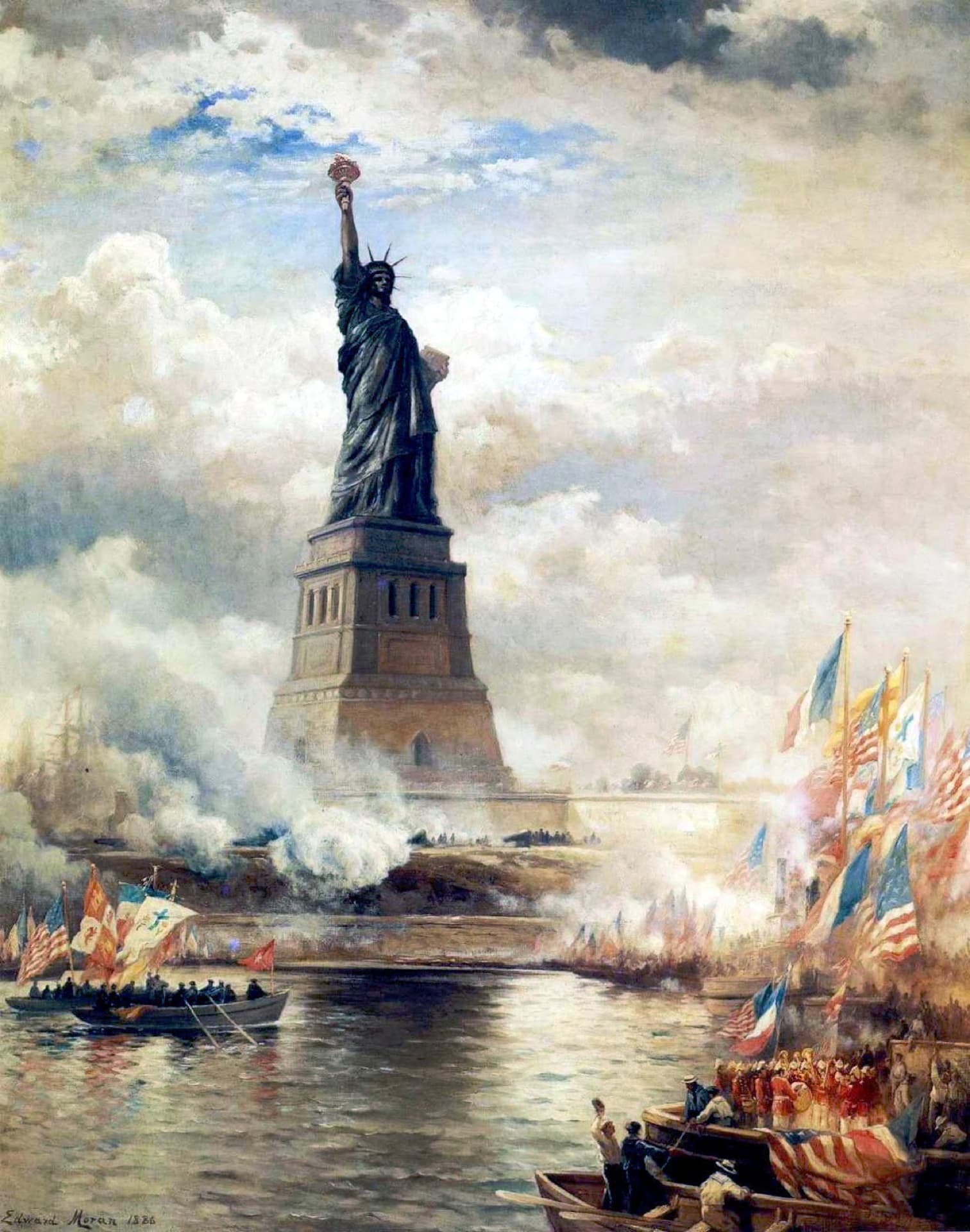
The arm is up and the face is already clear of its flag. Bartholdi was inside the torch and let the French tricolor fall early, before Senator Evarts had finished speaking.
It rained on 28 October 1886. The harbor filled with fog and gun smoke, and most of the estimated million people who turned out for the unveiling of Liberty Enlightening the World never saw it happen. The statue was a French gift 21 years in the making. Bartholdi's copper skin hung on an iron frame engineered by Gustave Eiffel, and France paid for it by public subscription. It came over in 350 pieces packed in 214 crates. Then it sat, because nobody on the American side would fund the pedestal. Joseph Pulitzer ran a newspaper campaign that got the money out of 120,000 small donors, most of them giving under a dollar. The ceremony went wrong in the way ceremonies do. Bartholdi was up in the torch, waiting for a signal to drop the French tricolor covering the face. He let it fall early. The guns and the whistles and the crowd went up straight through Senator Evarts' speech, and nobody heard the end of it. President Cleveland accepted the statue and promised the light would never fail. It failed regularly. The torch was useless as a lighthouse, and in 1901 the government handed it to the War Department. The sharpest thing said that day was said from the water. No women were allowed on the island for the ceremony except Bartholdi's wife and the granddaughter of Ferdinand de Lesseps. So the suffragists chartered a boat, pushed as close in as the police would let them, and made their speeches through the salutes. A 150-foot woman was going up as Liberty in a republic where no woman could vote. The newspapers reported it as a curiosity. Emma Lazarus had written her sonnet three years earlier to raise pedestal money, and nobody read it at the unveiling. The lines about huddled masses were cast in bronze and fixed inside the pedestal in 1903, 16 years after she died. Only then did the statue start turning into a symbol of immigration rather than a monument to an alliance between two republics. Ellis Island took in 12 million people, and every one of them came past her. Edward Moran painted the day itself and signed the canvas 1886: the torch arm up in the weather, the boats packed and dressed with flags, and the smoke still lying on the water.