Ancient Egypt · c. 2560 BC
The Mountain That Men Made
On the Giza plateau, ten thousand hands raise a pharaoh toward the sun
look closer
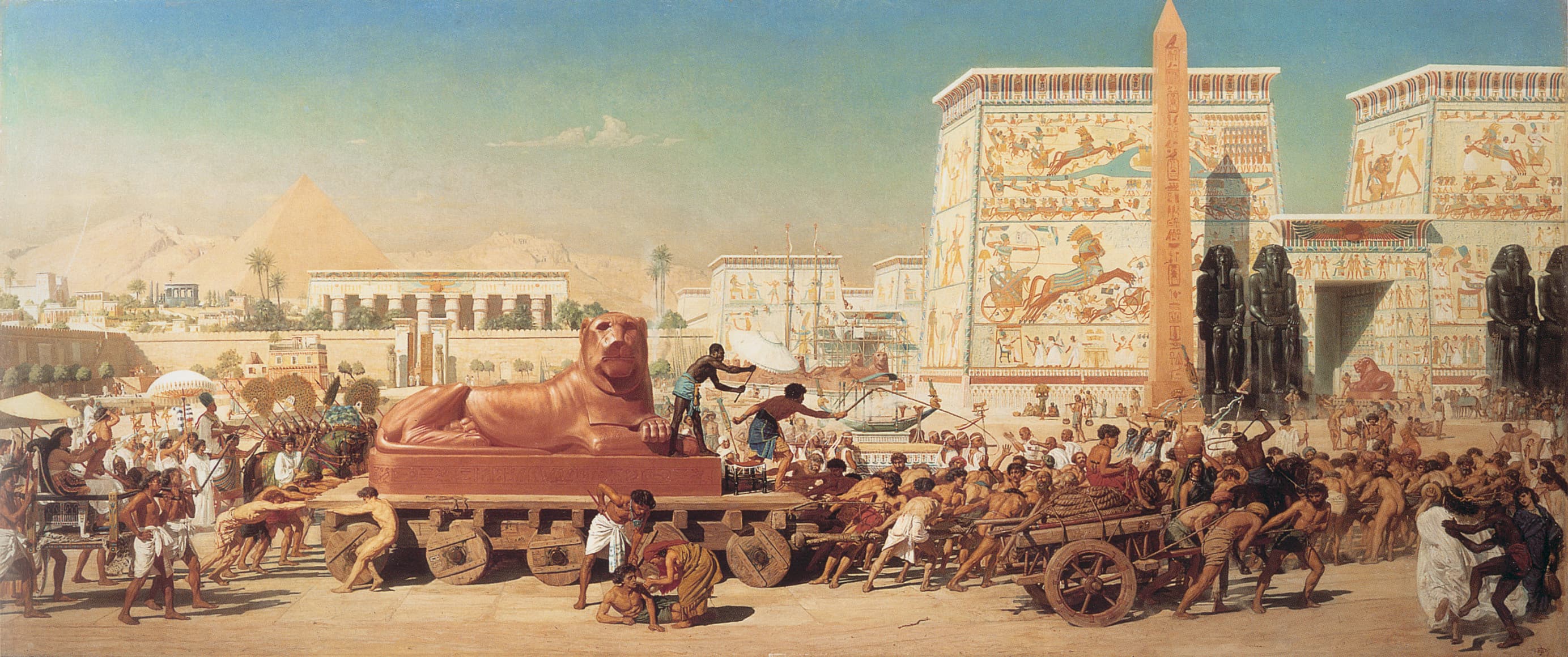
Men lean back into the ropes, and behind them a water jar rides on a woman’s head. The engineer John Hawkshaw bought the painting and objected that so few men could never shift that much granite. Poynter went back and added more.
The desert west of the river is becoming a horizon with corners. For most of a generation, the plateau at Giza has been the largest organized workplace on Earth: quarry gangs, hauling crews, bakers, brewers, scribes. The scribes count everything: 20 loaves a man, four jugs of beer, one life at a time. We can read some of that counting. The oldest inscribed papyri ever found came out of a sealed harbor cave on the Red Sea in 2013. They are the logbook of a boat crew under an inspector named Merer, and what they record is commuting. Month after month, the crew ferried white casing stone from the Tura quarries across the flood to the pyramid harbor: three round trips in a good 10-day week, rations noted, no poetry at all. They are not slaves; Herodotus will start that rumor 2,000 years later and it will take archaeology another 2,000 to put it down. The workers’ town south of the plateau has been excavated: industrial bakeries, breweries, dormitories, and rubbish heaps full of cattle and fish bone. Bone means meat, and meat means these men were fed, better fed than most farmers in the valley. Their skeletons show hard labor and also set fractures that healed straight, meaning someone was paid to treat them. Crews rotated in by levy when the flood drowned the fields and farm work stopped. The graffiti they leave inside the relieving chambers, where no visitor was ever meant to look, brags like a sports team’s: Friends of Khufu, the gang that does not tire. Block by block, 2.3 million of them at 2.5 tons each, the pyramid climbs. It will top out at 481 feet. The granite beams roofing the king’s chamber weigh 50 tons apiece, and came 500 miles downriver from Aswan by barge. The precision is the part no one has fully explained. The base covers 13 acres and is level to within an inch. The sides face true north to within 0.05 of a degree, set by people working with string, plumb weights, and the stars. When the white casing stones are polished, the monument will throw the sun back at itself, visible for a day’s walk in every direction. Nothing human hands make will stand taller until an English cathedral spire in the fourteenth century of another era. The king it is for will occupy it briefly; robbers reached the chamber so long ago that no one knows what, or who, they found. Khufu owned the largest building on the planet, and exactly one certain portrait of him survives. It is an ivory figurine 3 inches tall, found in the ruins of a temple far to the south, small enough to close a hand around. The mountain, and the names of its builders, remain.