Classical Greece · 430 BC
The Second Summer
A sickness comes over the wall into a packed city and the historian catches it too
look closer
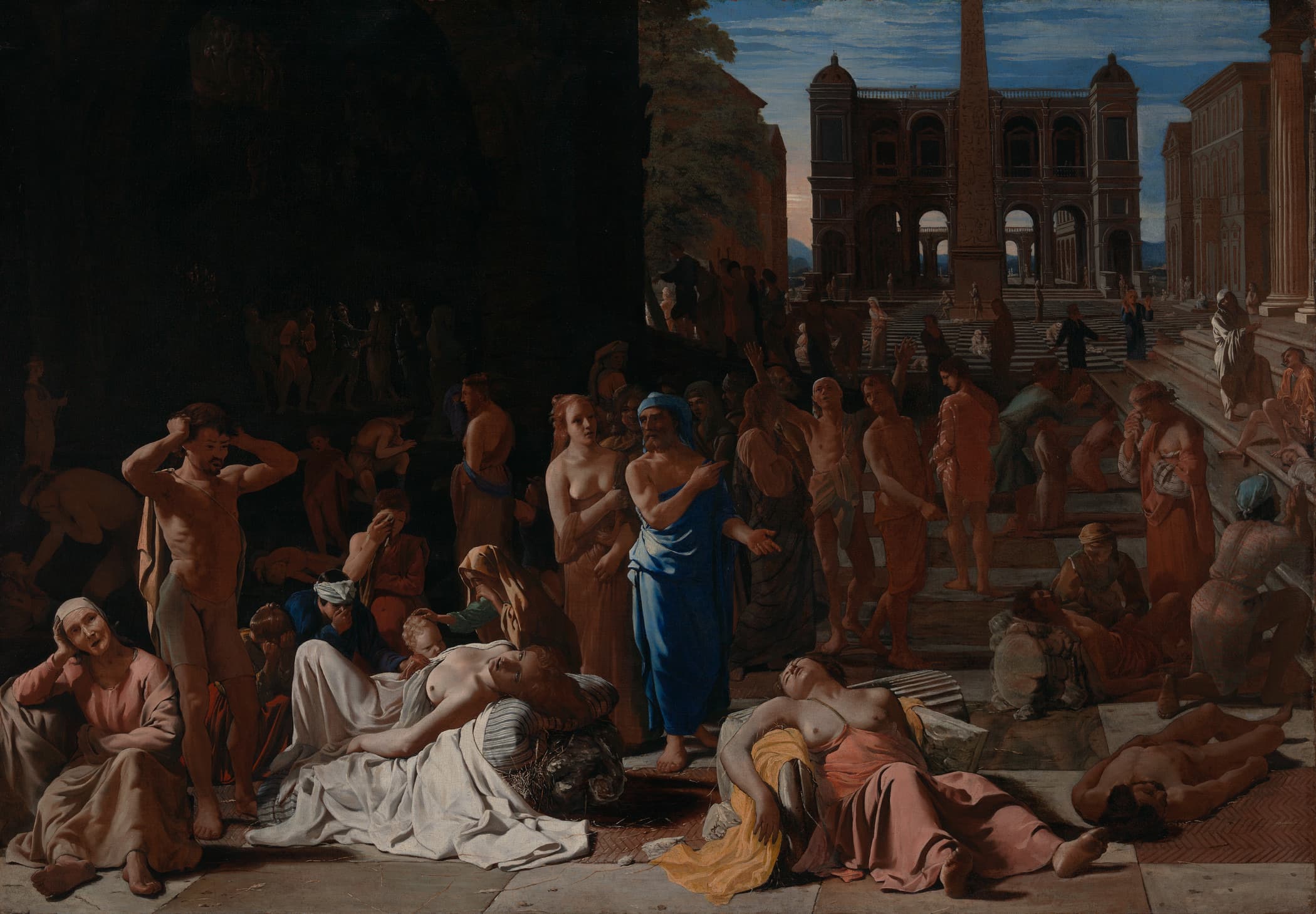
A dead woman lies on white cloth. Her baby sits up against her shoulder and reaches for the hand that comes down to it. Thucydides wrote that the people who nursed the sick were the next to catch it.
In the second summer of the war with Sparta, 430 BC, a sickness came into Athens through the port at Piraeus and did not leave for years. The timing could not have been worse. Pericles had pulled the whole population of the countryside inside the Long Walls and told them to let the enemy burn the fields. The plan was to be untouchable behind stone and fed by the fleet. Instead the crowding built a furnace. Thucydides writes that people died in the sanctuaries where they had gone to sleep, and at the fountains where they crawled to drink. Bodies lay on each other in the streets. Thucydides caught it and lived, and being the man he was, he took notes. His chapter is the first thing in Western writing that reads like a case report. He lists the burning in the head and the eyes, the tongue and throat gone bloody, the retching, the skin breaking out in blisters. The sick could not bear cloth on them and threw themselves into the rain tanks. He counts the course of it day by day. The birds and dogs that fed on the dead sickened or stayed away, and he marks that too. He notes one mercy: a survivor did not get it twice, which is why men who had recovered nursed the dying. He states plainly that he will not guess at the cause, and only writes it down so that a reader will know it again if it ever comes back. It took the man who had planned the siege. Pericles gave the funeral oration for the war’s first dead that winter, then lost two sons to the plague, and died of the disease himself in 429, his strategy still only half run. Thucydides reckoned later that the sickness did more than any battle to hollow Athens out, in bodies and in nerve. People who expected to be dead by autumn stopped fearing the gods and the law together. In 1994, crews digging a station for the Athens metro at Kerameikos cut into a wide burial pit just outside the old cemetery. The dead had been stacked in a hurry, arms and legs overlapping, as many as 240 of them, children among them. Grave goods date the pit to exactly these years. DNA later pulled from the teeth pointed, the researchers argued, to typhoid. The picture here is not Athens. Michiel Sweerts painted it in Rome around 1652, a plague city of his own imagining. The dead lie on the pavement and the living hold their heads, while an arcaded palace stands over them in clean evening light. Sweerts left Europe as a lay missionary and died in Goa, in India, at 46. He knew what a port that had caught something looked like.