The Revolutionary Age · 26 December 1825
The Square That Stood Still
3,000 soldiers refuse an oath in the snow
look closer
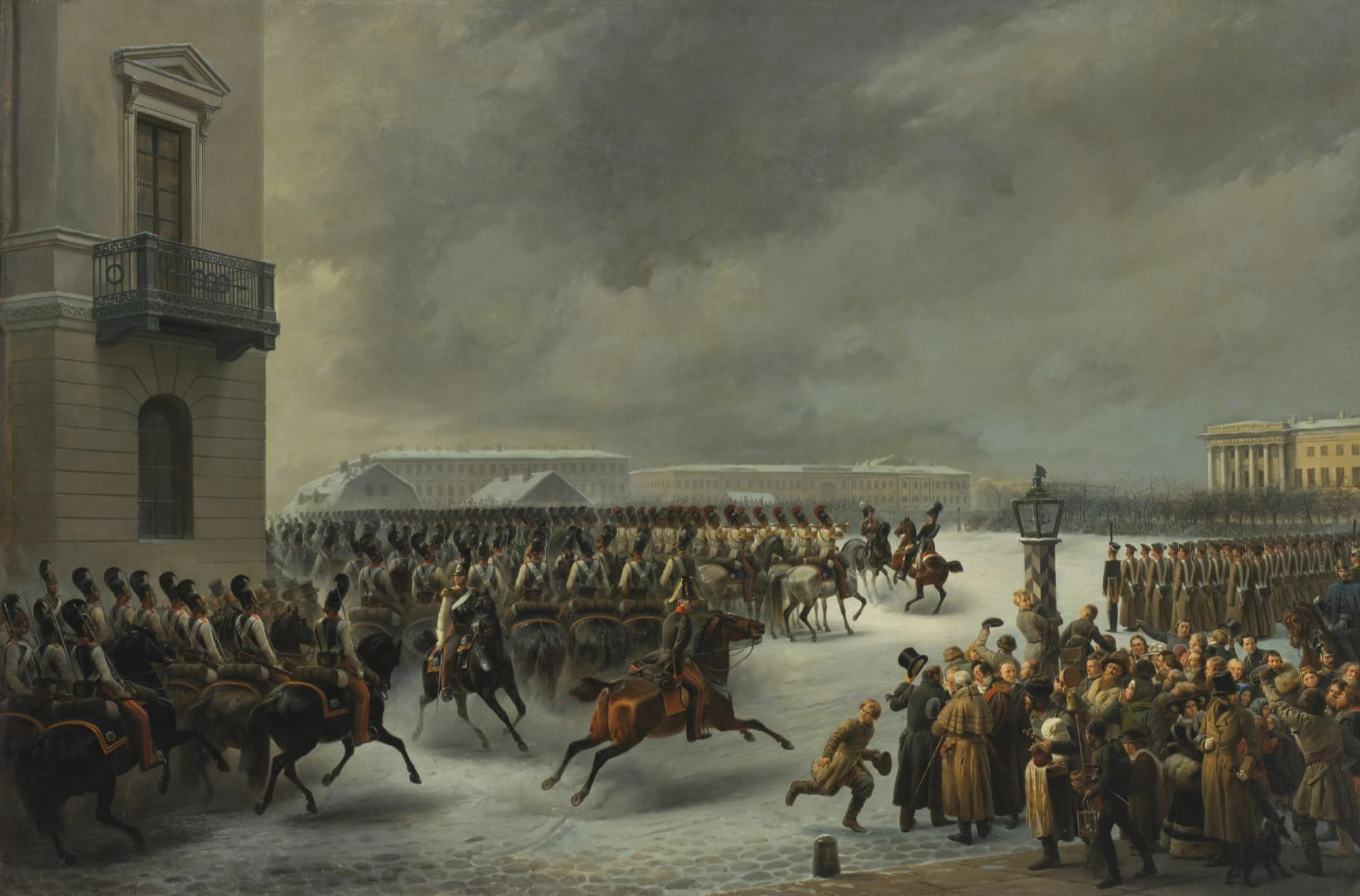
Horsemen in plumed helmets and white breeches wheel out on black horses. This is the Life Guards Horse Regiment. Timm named the painting after them, not after the revolt.
The Russian succession of 1825 was a filing error at imperial scale. Alexander I died childless at the start of December. The next brother, Constantine, had secretly given up his claim years earlier, but nobody had told the army, which swore to him anyway. The oath had to be taken again, to the third brother Nicholas, on 26 December. A group of guards officers saw its one morning. They were veterans of the war against Napoleon who had marched to Paris and come home with constitutions in their heads. Their secret societies had spent a decade drafting a Russia that did not exist. They brought some 3,000 troops to Senate Square, formed them up beside the Bronze Horseman, the statue of Peter the Great, and refused the new oath, shouting for Constantine and Constitution. The story that the soldiers thought Konstitutsiya was Constantine's wife is probably a slander, and everybody repeated it. Then, having seized the morning, the conspiracy stood still in it. The officer designated dictator never appeared. For hours the men held their ground in the freezing wind while Nicholas gathered loyal regiments around them. Then Governor Miloradovich, a hero of 1812 who was liked on both sides, rode out to talk the soldiers home. One of the plotters shot him in the back. Cavalry charges skidded on the ice. At dusk the new tsar, 29 years old and plainly reluctant, gave the order he would be remembered by. Three guns fired grapeshot at close range across the square and into the crowds. The revolt broke, and the bodies went under the ice of the Neva. The punishment was staged to be watched. Five men were hanged, and when three of the ropes broke they were hanged again. Over a hundred more were stripped of rank and sent to the mines and settlements of Siberia. Then came the part that outgrew the failure. Some 11 wives, princesses among them, gave up their titles, their property and their children to follow their husbands into exile. The Decembrists became Russia's political ancestors, mourned by Pushkin and claimed by every revolutionary generation after them, down to the one that finished the job in 1917. Timm made his painting in 1853, while Nicholas was still on the throne, and made it for the other side. It rides with the loyal Horse Guards. The rebel line is a grey wall further off, and a boy sprints out of the hooves' way. Even from the tsar's saddle the picture admits the main thing: that line is standing perfectly still. It hangs in the Hermitage.