Feudal Japan · 21 April 1591
The Tea Master’s Last Cup
The man who taught a warlord to drink tea is ordered to open his belly
look closer
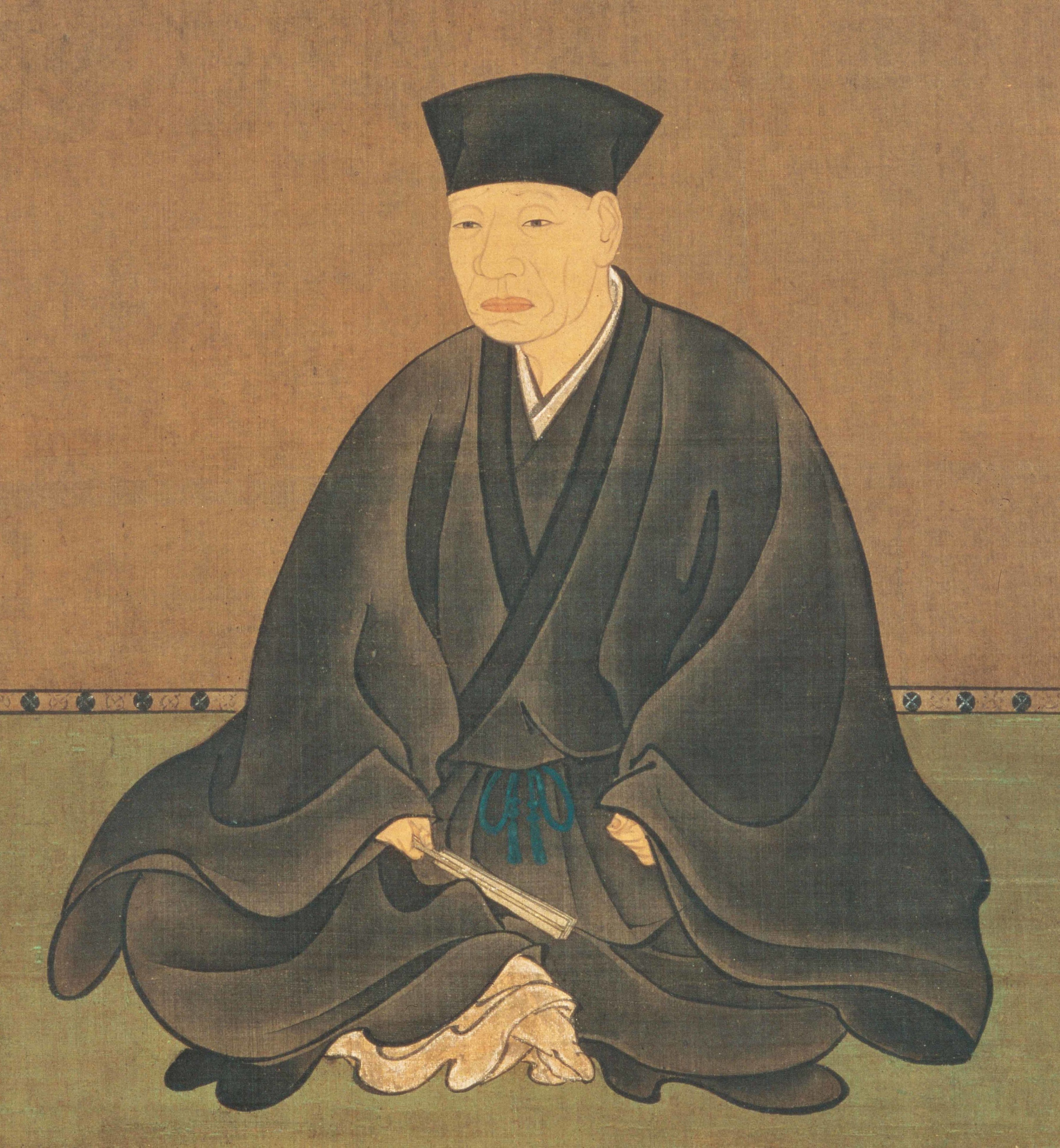
The face under the stiff black cap is lined and closed. The mouth is set. The writing on this scroll is dated 1595, 4 years after Hideyoshi ordered Rikyū to open his belly.
On the 28th day of the second month of 1591, in Kyoto, the most famous tea master in Japan is ordered by the ruler of Japan to kill himself, and he does. Sen no Rikyū is about 70. For years he has decided what counts as beautiful at the court of Toyotomi Hideyoshi, the peasant’s son who now rules the country. Rikyū’s judgment on a tea bowl or a hanging scroll could make or unmake its worth. He built the aesthetic the Japanese call wabi: the beauty of the plain, the worn, the deliberately imperfect. He shrank the tea room to two mats and cut the entrance down to a low square, low enough that a guest had to crawl through it. Lord and commoner both bowed to come in. He preferred a rough, lopsided Raku bowl to anything gold. Why Hideyoshi turned on him is still argued. The reason given was a wooden statue. Rikyū had paid to repair the great gate of the Daitoku-ji temple, and the monks set a carved image of him in the upper story. Anyone passing beneath, the ruler included, walked under Rikyū’s feet. Other accounts say he refused to hand his daughter to Hideyoshi, or that he sold tea utensils at a profit. Others say only that the tea master had grown too powerful and too willing to say no to his ruler. The likeliest truth is that a man who ruled taste had become a man who could not be ruled. Rikyū was allowed the death of a samurai rather than an execution. The story goes that he held one final tea gathering for his closest guests. He served them and gave each a piece from the room as a keepsake. Then, alone, he wrote a death verse and cut himself open. He had spent his life making a ceremony out of a bowl of green tea and a few minutes of attention, and he made one out of his end. The portrait is by Hasegawa Tōhaku, one of the great painters of the day and a friend, with an inscription added by a Daitoku-ji abbot. Rikyū sits in a black robe and black cap, a folded fan across his knee, his hands still, his face lined and closed. There is no setting, no gold, nothing to look at but the man, which is the whole point of the way he lived. The tea schools his descendants founded are still teaching his ceremony 400 years later, from the same two mats and the same small door.