The Renaissance · 16 November 1581
The Tsar's Own Hand
One blow with a staff, and Russia runs out of heirs
look closer
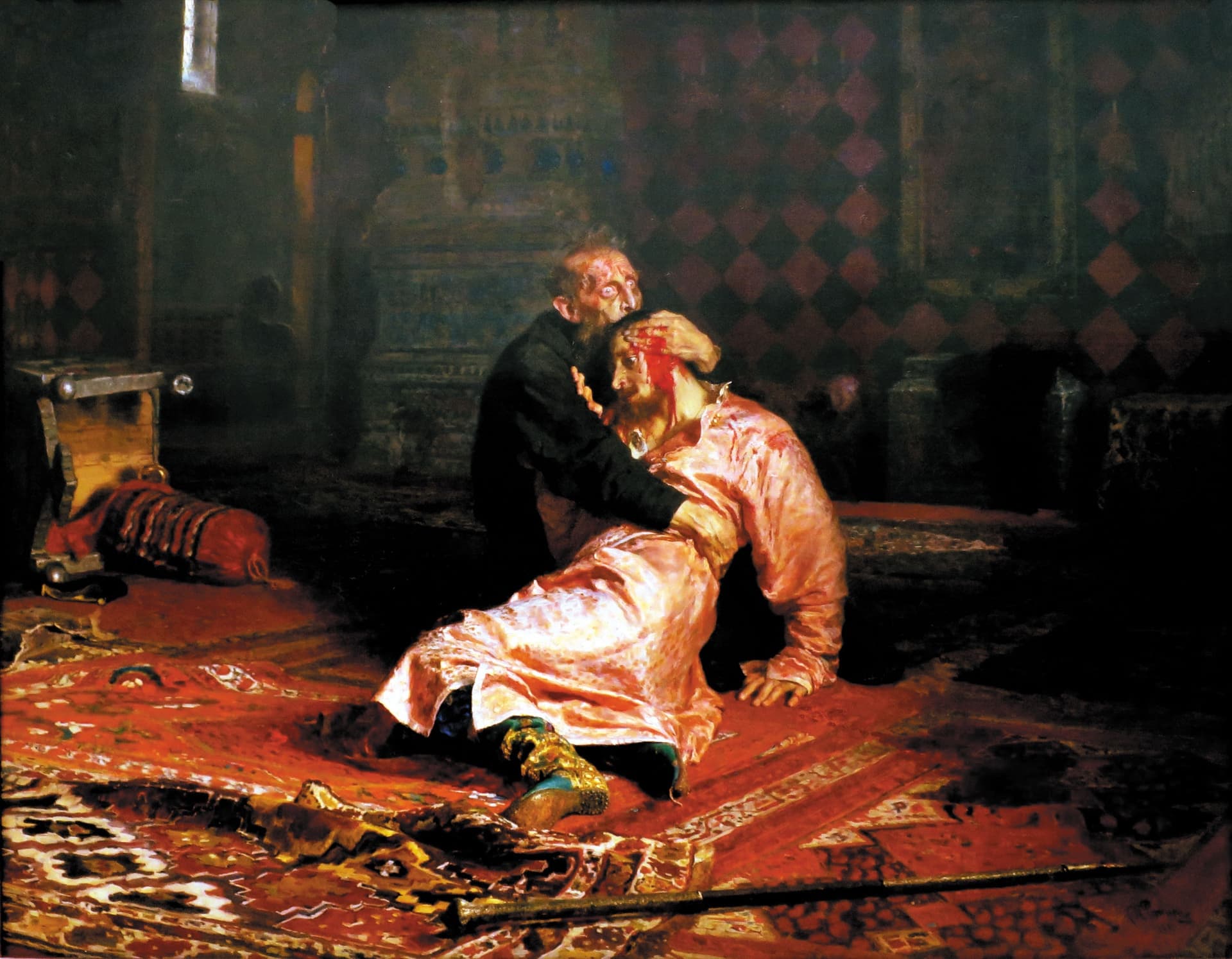
Repin said he wanted power looking at what it has just done. A knife went through both faces in 1913. Repin was 68 by then, and he painted them back.
The quarrel began, by the account the papal envoy collected at the Russian court, with a dress. In November 1581, at the fortified residence of Alexandrova Sloboda, Ivan the Terrible found his pregnant daughter-in-law dressed too lightly for his standards of modesty, and he beat her. She lost the child. His son and heir Ivan was 27, and until that week he had been his father's companion in everything, including the massacres. He confronted him. The old tsar, who went everywhere with an iron-tipped staff, swung it at the end of the argument and caught his son at the temple. The younger Ivan died a few days later, on the 19th, with his father howling at the bedside. Witnesses said the tsar beat his own head against the coffin at the funeral. Whether it happened exactly so is still fought over. What is documented is the tsar's letter admitting he had struck him, and the sudden grants to monasteries for prayers for the boy's soul. The succession now ran through Feodor, the pious, feeble second son. Feodor died childless in 1598, and the seven-century dynasty of Rurik died with him. The state fell into the 15 years of famine, impostors, and civil war that Russians still call the Time of Troubles. Repin painted the moment 300 years later, and everyone understood it was not really about 1581. He began it after watching the public hangings of the revolutionaries who had assassinated Alexander II in 1881, wanting, he wrote, a subject where power looks at what it has just done. He gave the son the calm of the already dying and gave the father everything else. The embrace comes too late and the hand is pressed uselessly over the wound. The eyes are the actual subject of the painting. The picture was banned within months of its 1885 debut, the first painting in Russian history the censors formally forbade. The collector Tretyakov hung it anyway once the ban lapsed. In 1913 an icon painter slashed both faces with a knife, shouting that there had been enough blood. Repin, then 68, repainted them. The museum's curator threw himself under a train. In 2018 a drunk visitor smashed the case with a security pole and tore the canvas in three places, saying the painting insulted a slandered tsar. The restoration took years. The picture now hangs behind armored glass in the Tretyakov. Russian nationalists still petition to have it removed, on the argument that the killing is unproven. No one has ever petitioned to remove the eyes.