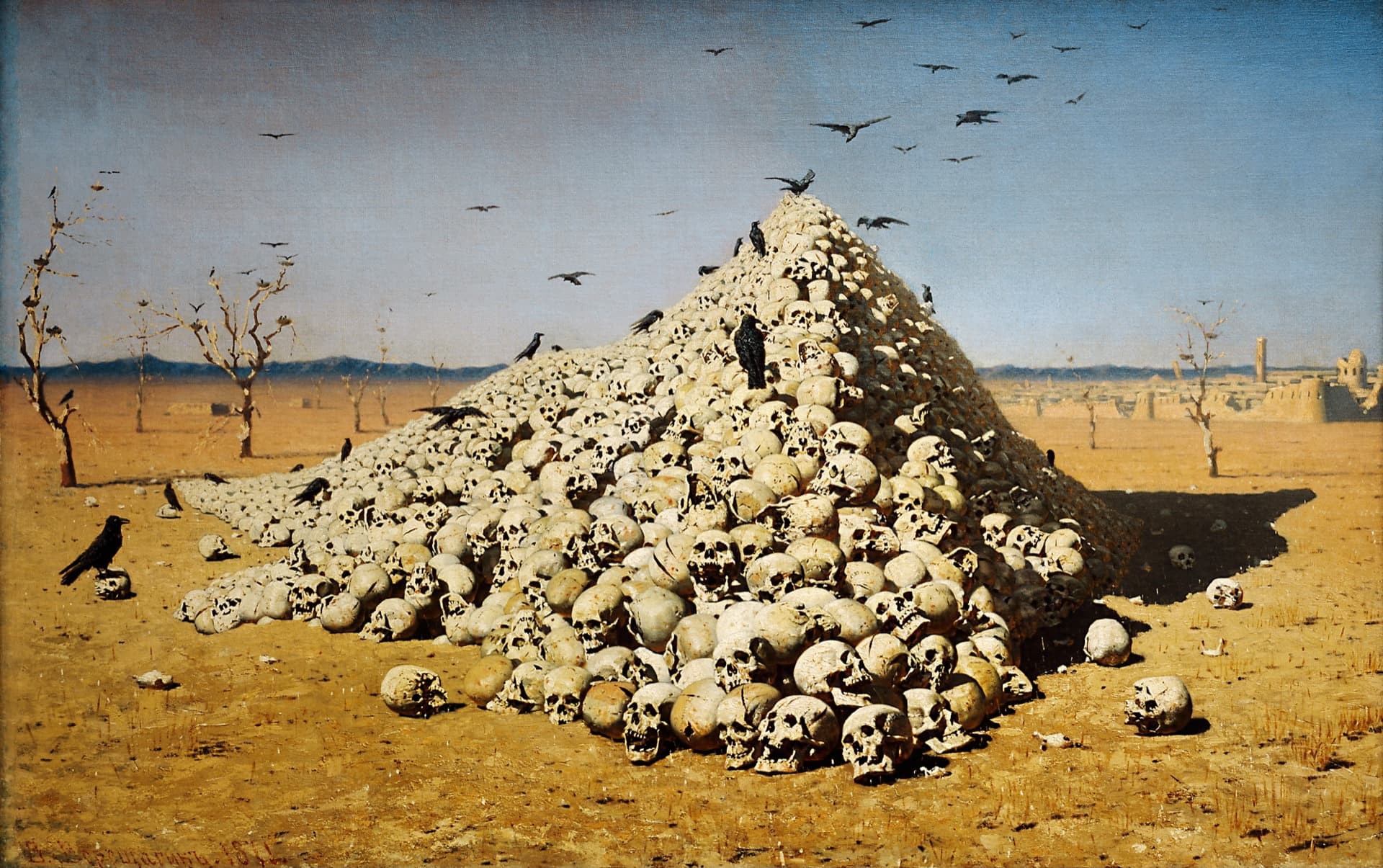
The Machine Age · 1871
Dedicated to All Conquerors
A pyramid of skulls with a dedication written on the frame
look closer
A sabre split in one crown, a round hole punched through the next. Vereshchagin damaged every skull differently, and some of the damage comes from firearms Tamerlane's armies never carried.
Vasily Vereshchagin painted this in 1871, after two years in Turkestan. He had not been a war artist in the safe sense. He was inside Samarkand during the siege of 1868, fought in the defense, and was given the Cross of St George, the one honor he ever accepted. He refused a professorship from the Academy, refused decorations after that, and once burned three of his own canvases rather than let them be misunderstood. He was, in the most literal sense available in the nineteenth century, a soldier who had changed sides in an argument about whether soldiering was admirable. The first title was The Triumph of Tamerlane, after the towers of skulls the conqueror built from the populations of cities that had refused him. Then Vereshchagin generalized it, and wrote his generalization on the frame, where the museum keeps it to this day: dedicated to all great conquerors, past, present, and to come. The painting itself is almost clinical. A heap of skulls in a dead plain, dry trees, a ruined city on the horizon, crows working the pile. Up close the argument sharpens. The skulls are damaged one by one, this one split by a sabre, that one holed by a bullet. The mound is not a symbol but an inventory, and some of the wounds come from weapons Tamerlane never had. The Russian military establishment loathed it. Officers said it slandered the army; there was pressure to keep the Turkestan series out of view, and one general is said to have wanted it destroyed. Pavel Tretyakov bought the whole series in 1874 for the gallery that became Moscow's, which settled the matter by making the argument permanent and free to enter. Vereshchagin kept walking toward wars for the next 30 years, painting the Balkans, India, Japan, the Philippines, always at the front and always with the same insistence that the dead be countable. In 1904 he was aboard the battleship Petropavlovsk off Port Arthur, sketching on deck, when she struck a mine and went down in under two minutes with the admiral and most of the crew. The man who painted the mound of skulls left no grave; the sea took him at 61, at the front, working.