Ancient Rome · c. 458 BC
Fifteen Days of Power
They found the dictator behind a plough and he gave the office straight back
look closer
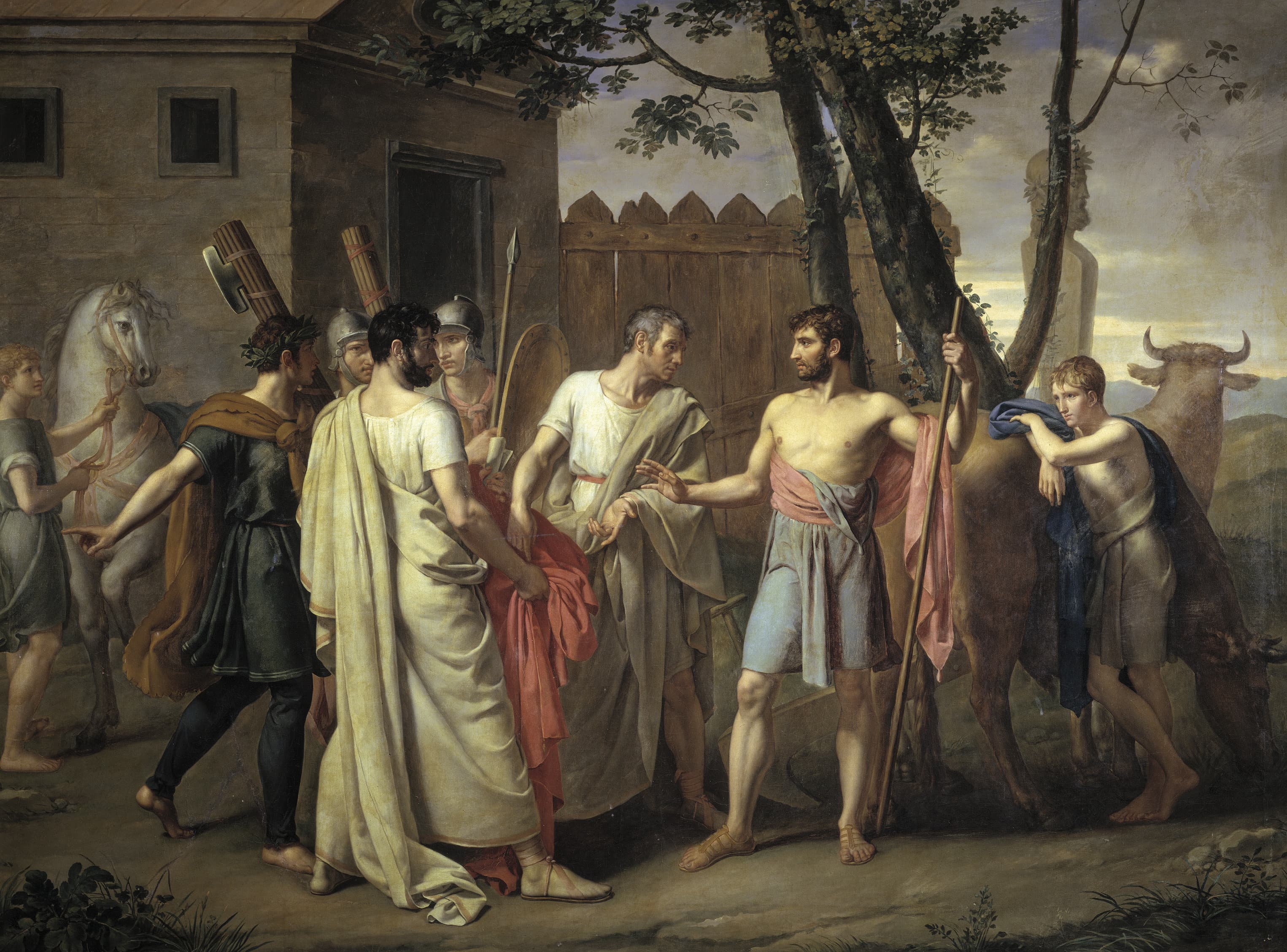
The head of the delegation speaks with both hands open and empty. Cincinnatus hears him out bare-chested and dusty. The folded red robe of office waits in the shadow behind them.
The messengers cross the Tiber and find him working. Lucius Quinctius Cincinnatus, once a leading man of Rome, now works a four-jugera smallholding on the far bank because a lawsuit ruined him and this is what is left. Livy has him sweating over a ditch, or leaning on his plough, when the delegation from the Senate arrives in formal dress. They ask him to put on his toga so they can deliver their message with proper respect. He calls to his wife Racilia to fetch the toga from the hut, and wipes off the dust. Then he hears the news: a Roman army under the consul Minucius is trapped by the Aequi on Mount Algidus and may be gone by the week’s end. The Senate has named him dictator, the emergency office that answers to no one and lasts up to six months. He takes it and moves fast. He orders every man of military age to the Field of Mars by nightfall with cooked rations for five days and twelve wooden stakes, marches through the dark, and reaches the trapped legions before dawn. His fresh troops surround the surrounders; each soldier drives in his stakes and they pen the Aequi inside their own siege. By morning it is finished. He makes the beaten enemy pass under the yoke, a spear laid across two uprights low enough that grown men must stoop to walk beneath it, the deepest humiliation a Roman could hand out. Then the part that turned him into a fable: the war was won in a day, and Livy says he resigned the dictatorship on the sixteenth day and walked back to the same unfinished furrow. He had held absolute power over Rome for a fortnight and set it down early because the job was done. Juan Antonio Ribera painted the scene in 1806, a Spaniard of 27 living in Rome on a royal pension and working in the cold, exact style of David. He catches the turn of the whole story. The senators stand in white on the left with the fasces of the office they are bringing, and Cincinnatus is on the right, half-dressed and bare-chested, one hand still near the plough, listening. Behind him a boy leans on the ox. A different set of officers came looking for this man 22 centuries later. When the Continental Army disbanded after the American Revolution, its officers formed a society and named it for Cincinnatus, the general who won and went home. George Washington was its first president. A river town in Ohio took the society’s name and became Cincinnati.