Ancient Rome · c. 390 BC
The Geese on the Wall
The Gauls burned Rome, and only the sacred geese heard them coming
look closer
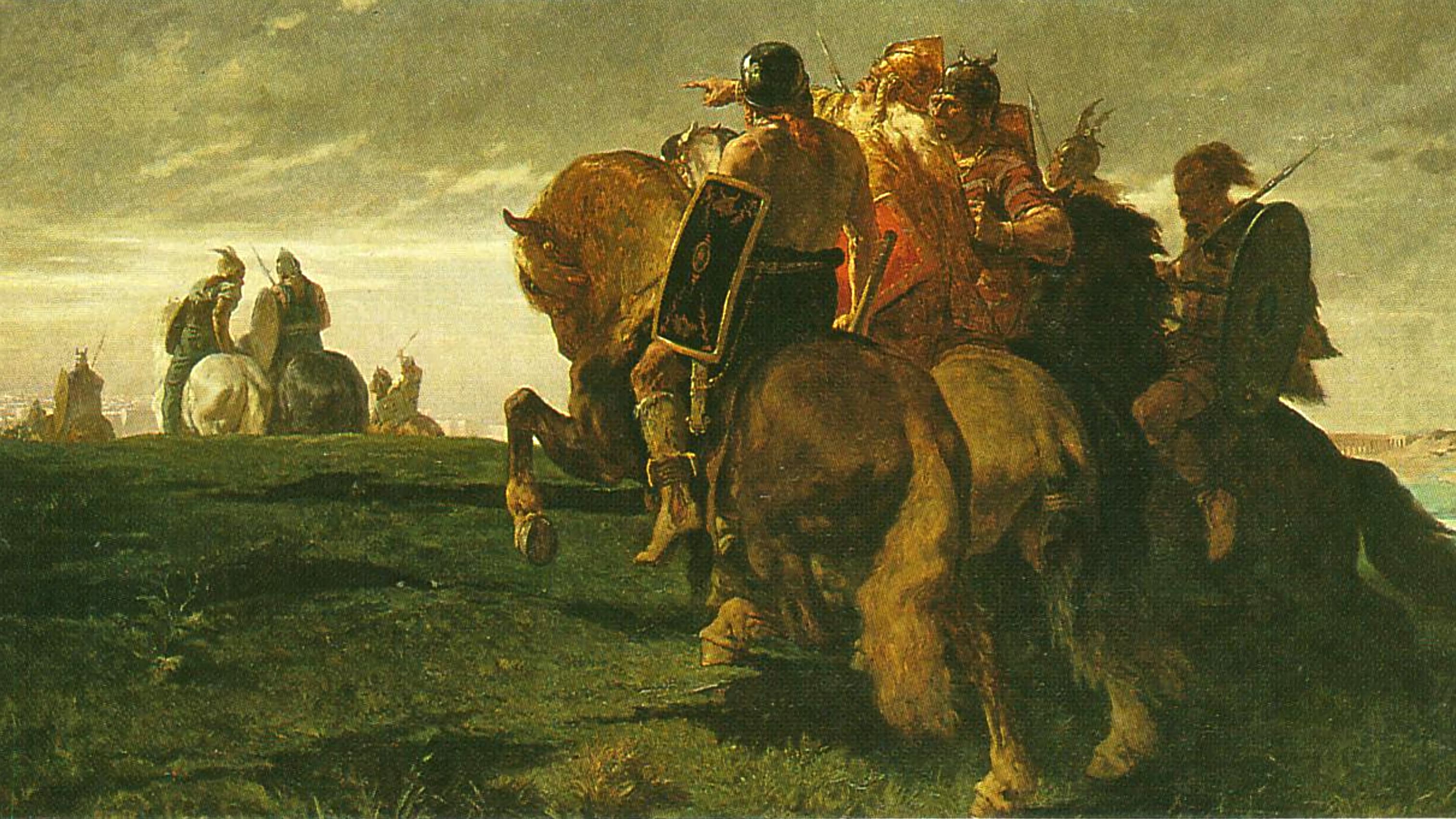
A rider in a dark helmet flings out an arm and points ahead. The white-haired man next to him does not move. Behind them, the spears of the rest of the band crowd in.
The Romans lose the city because they lose one afternoon by a small river. In 390 BC a war band of Gauls comes down out of the north under a chief the Romans called Brennus. The legions meet them 11 miles from home, at the stream called the Allia. The line breaks almost at once; the rout is so total that the day, the eighteenth of July, is marked unlucky on the Roman calendar forever after. The Gauls walk into an open city. Most of Rome has fled. On the Capitoline hill a garrison bars the gate and holds, and around them the Gauls settle in and burn the rest, and the siege drags into months. One night the Gauls try the hill in the dark. They find a path up the cliff and climb it without a sound, and the sentries hear nothing, and even the dogs sleep through it. What they do not account for is the flock of geese on the hill, kept there as sacred to the goddess Juno. The birds are hungry that season: the garrison is starving, and no one has spared them grain. The geese hear the first hands on the rock and start screaming. A former consul named Marcus Manlius wakes, runs to the wall, and shoves the lead climber back off the edge into the men behind him, and the assault comes apart on the rocks. Rome kept geese on the Capitol for centuries afterward in gratitude, and once a year carried a dog through the streets on a stake as punishment for the watchdogs that had not barked. The siege ended in a bargain, not a battle. Starving, the Romans agreed to buy the Gauls out for a thousand pounds of gold, and when the metal was weighed the Romans complained the Gaulish weights were rigged. Livy gives Brennus the line that outlived him: he threw his own sword onto the scale to make it heavier still and said vae victis, woe to the conquered. Évariste-Vital Luminais built a career on the Gauls. French critics took to calling him le peintre des Gaulois, the painter of the Gauls. He painted them at the moment before all this. A knot of horsemen on heavy ponies has halted on a rise of dark grass, long shields hanging at their knees. One of them flings an arm out toward the hazy plain they are about to ride down into. Roman writers preferred a different ending, in which the exiled hero Camillus charges in at the last second and drives the Gauls off with the gold unpaid. The archaeology under Rome is less flattering. There is a scorched layer in the early city, ash and burned debris, sitting at about the right depth for the year the geese earned their keep.