Ancient Rome · c. 509 BC
The Consul and His Sons
The man who freed Rome sends his own boys to the axe and does not turn away
look closer
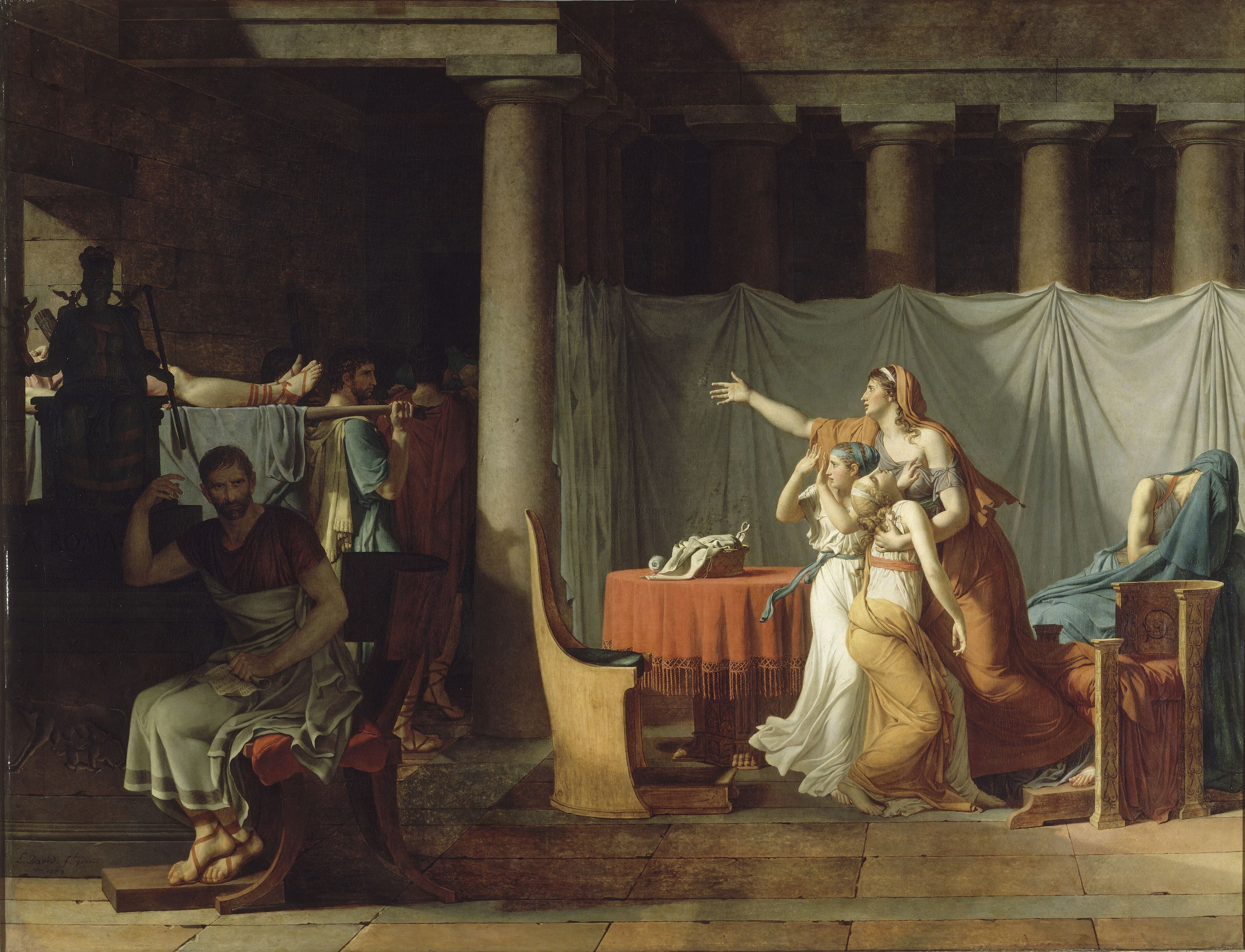
Brutus sits in the dark at the foot of the statue of Roma. The word ROMA is cut into the pedestal beside him, and a written paper is crushed in his fist. The stretcher goes past behind his head, and he does not turn.
The kings end with a rape and a knife. Sextus, son of the last king Tarquin the Proud, forces himself on a nobleman’s wife named Lucretia. She summons her husband and her father, tells them plainly what was done, and makes them swear vengeance. Then she stabs herself in front of them, so that no unfaithful woman can ever cite her as an excuse. Standing there is Lucius Junius Brutus, who has spent years playing the fool to stay alive under a suspicious king. He pulls the blade from her body, and the idiot everyone dismissed leads the city in throwing the Tarquins out. Rome will have no more kings. In their place it invents two consuls, who hold power for a single year and check each other. Brutus is elected one of the first pair, in 509 BC, the year the Republic dates from. Then the thing that makes the story unbearable. A plot forms to bring the royal family back, and among the conspirators are two of Brutus’s own sons, Titus and Tiberius, young men who would rather be princes than citizens. The letters are found. As consul, Brutus must judge them. Livy writes that he sat in the magistrate’s chair while his sons were stripped, tied to stakes, beaten with rods and beheaded. Livy says the crowd watched the father’s face more than the executions, and that he never looked away. He had freed Rome and it cost him his children on the same account. He died in battle soon after, running his horse straight at the exiled prince who had caused all of it, the two killing each other on the point of a spear. David finished his version in 1789 and it reached the public at the worst possible time for a king. The lictors, the officers who attend a consul, come in from the left carrying the bodies home. Brutus sits jammed into the shadow at the foot of a statue of Roma, a written paper crushed in his hand, refusing to watch what he has ordered. The women of the house shatter into grief on the bright side of the canvas. On the table between them, David left the mundane and terrible thing: the women’s workbasket, scissors and cloth, the ordinary evening this house was having before the letters came. The Salon opened weeks after the Bastille fell. Officials wanted the picture withdrawn as too dangerous, and the crowds, who understood it perfectly, would not let them.