Ancient Rome · 8 November, 63 BC
How Long, Catiline
A consul rises in a temple full of armed guards and names the man across the room
look closer
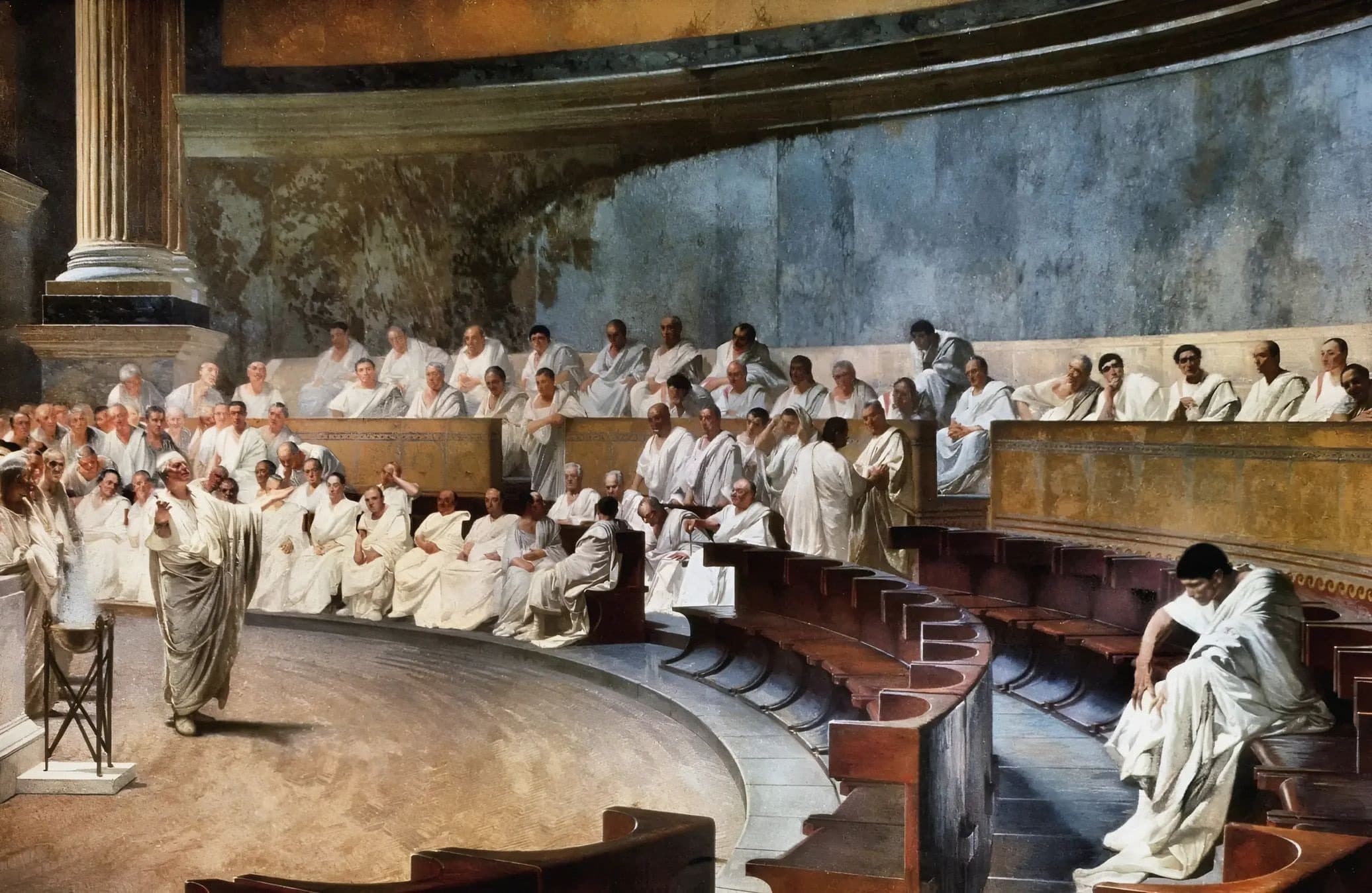
Cicero stands on the floor of the Senate house with one arm flung out across it. A fire burns in a bronze stand at his left. His opening line is the one every Latin student still learns: how long will you go on abusing our patience.
It is the eighth of November, 63 BC, and the Senate has not met in the usual house. Cicero has called it to the temple of Jupiter Stator, on the slope below the Palatine, and posted armed men at the doors. He has learned that Catiline means to have him killed at dawn and burn parts of the city on a set night. Catiline comes anyway and takes a seat. The senators near him get up and move, and the bench around him empties. Then the consul stands. Quo usque tandem abutere, Catilina, patientia nostra: how long will you go on abusing our patience. He has the dates, the safe houses, the names, and he says so, to Catiline’s face, in front of everyone. Catiline tries to answer, asks the fathers not to believe a man whose family is new to Rome, and the shouting drowns him. That night he leaves the city and rides north to the army his allies have been raising in Etruria. The men he left behind are clumsier. They approach a delegation of Gaulish envoys, the Allobroges, hoping for cavalry, and the Gauls, after weighing it, tell the consul instead. Cicero has the ringleaders bring their request in writing, sealed, and springs the trap at a bridge outside town. Now he holds letters in the conspirators’ own hands. What to do with five citizens caught in arms against the state was argued in a single long session in December. Caesar, praetor-elect that year, urged prison for life. Cato urged death, and the house went with Cato. There was no trial. Roman law let a citizen appeal a death sentence to the people. By strangling the five in the dark, the state stepped around that right, and that is exactly what would be used against Cicero later. They were taken down into the Tullianum, the choking pit under the Capitol, and killed one at a time. Cicero waited above, walked them there himself, and when it was done came out to the crowd in the Forum and gave them a single word. Vixerunt. They have lived. He would not say the men were dead; he said their lives were behind them, and went home a hero, for now. The scene became the picture every schoolroom keeps of what a parliament in crisis looks like, and the painting that fixed it is younger than the photograph. Cesare Maccari frescoed it in 1889 on a wall of the Palazzo Madama in Rome, the seat of the Italian Senate since 1871, so senators walking to their own debates passed Cicero going to his. Maccari put Catiline alone on the right, hunched on a bench with a clear ring of empty seats around him, everyone leaning away. It is a wonderful lie. The Senate that day did not sit in this cool marble chamber at all, but in a temple. Maccari was painting for a young state that wanted grand Roman parents, and he gave it the room it wished it had.