Ancient Rome · 15 March, 44 BC
Twenty-Three Wounds
A dictator walks into a meeting his friends have arranged around him
look closer
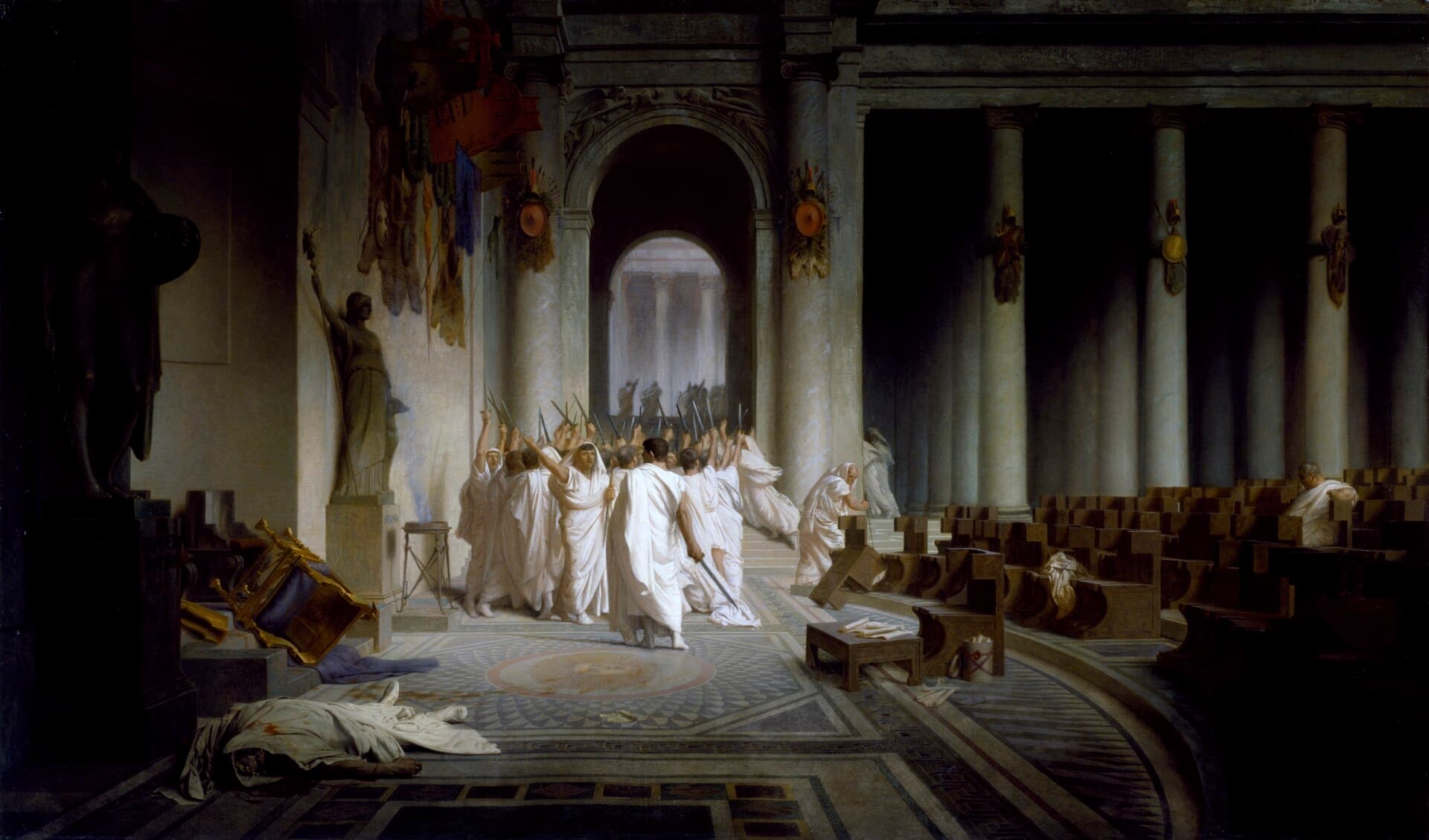
Caesar lies under his own toga on the marble, with one hand fallen out of the cloth onto the floor. A stain of blood is on the white. Antistius examined the body afterward and counted 23 wounds, and only one of them was fatal.
On the morning of the fifteenth of March, 44 BC, Caesar almost stayed home. His wife had slept badly and begged him to; he had been feeling unwell. A conspirator called Decimus, a man he trusted, came to the house and talked him out of it. They went together to a meeting of the Senate held that day in a hall attached to Pompey’s theatre, because the usual house was being rebuilt. Someone pressed a warning note into his hand on the way in. He kept it rolled, unread. The house was filling up. Suetonius put the number in the plot at more than 60. They crowded him with a petition, a brother’s recall from exile, and one of them pulled at his toga, the signal. The first blow came from behind, to the neck, and was clumsy; Caesar caught the arm and is said to have snarled that this was violence. Then there were too many. He fought at first, then saw Brutus among the knives and stopped. Suetonius, writing a century and a half later, says the honest thing. Most sources have Caesar die without a word. Some report that when he saw Brutus he said, in Greek, kaì sý, téknon: you too, child. The Latin line everyone knows, et tu, Brute, comes off the Elizabethan stage, not out of a Roman record. He fell at the base of Pompey’s statue and pulled his toga over his face. Afterward a physician named Antistius examined the body in what may be the first recorded post-mortem in history. He counted 23 stab wounds and concluded that only one was fatal, the second, to the chest. The rest, from men jostling in a tight scrum with daggers, had mostly been shallow or wild; several of the killers wounded each other. The Senate scattered into the streets in panic. The body of the most powerful man in the world lay alone on the floor for hours. Then three household slaves put it on a litter, one arm hanging down, and carried it home through the city. Jean-Léon Gérôme painted that emptiness rather than the murder. The Death of Caesar, finished in the 1860s, now hangs at the Walters in Baltimore. It gives most of its canvas to a bright, vacated hall: overturned benches, a toppled gilded chair, the assassins withdrawing in a knot with their swords still raised. One senator is still in his seat on the right, with his head down. Caesar himself is a small white bundle in the lower corner, easy to miss. Gérôme trusted the room to do the work. The men who did it believed they had saved the Republic. Within three years two of them were dead by their own hands. The boy Caesar had adopted was on his way to becoming the first emperor.