Ancient Rome · 88 BC
Tell Him What You Saw
A homeless general answers from the rubble of a homeless city
look closer
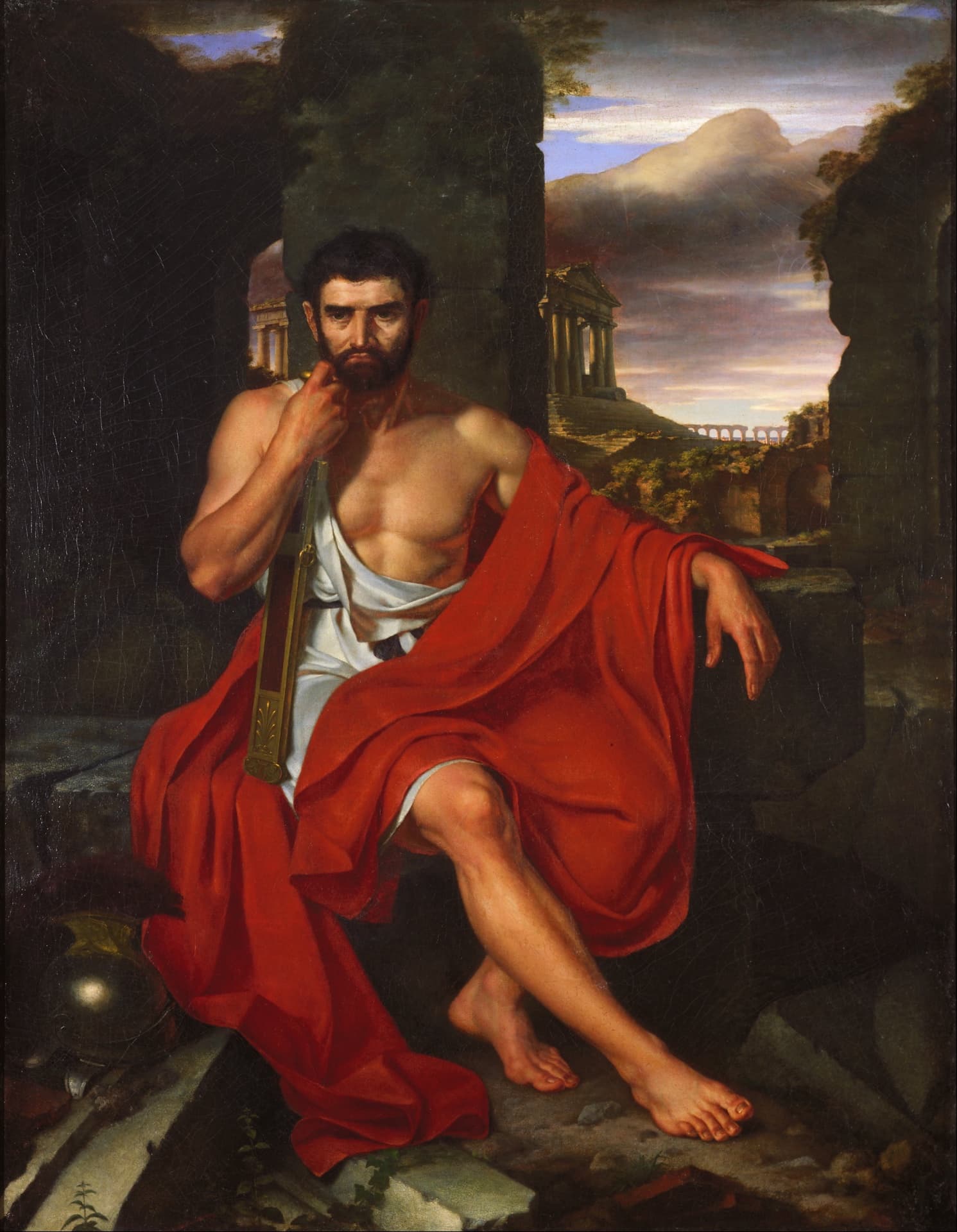
Marius hooks a finger into his beard and works out who owes him what. A Cimbrian soldier was sent into his cell at Minturnae. He dropped the sword on the strength of Marius's voice alone.
The most decorated soldier in Roman history spent part of 88 BC hiding in a marsh. Gaius Marius had been consul six times over. He had stopped the Cimbri and Teutones when Italy expected to be overrun. He had rebuilt the legions out of men who owned nothing, which made the army professional and, though nobody said it aloud yet, personal. His rival showed what that meant. Sulla marched a Roman army on Rome itself, the first man ever to do it. Marius, close to 70, went out a window and south along the coast. At Minturnae they pulled him naked out of the mud of the marshes and put him in a cell to await the sword. The town sent in a Cimbrian trooper to do it, a man from the nation Marius had annihilated. In the dark cell the old man did not move. A voice like a parade ground asked the man whether he dared to kill Gaius Marius. The soldier dropped his sword and ran, and the magistrates of Minturnae, taking the point, put their prisoner on a ship instead. It carried him to the coast of Africa, where he came ashore at the site of Carthage: the city Rome had erased two generations earlier, streets and temples still lying where they fell. The Roman governor of the province wanted no part of the fugitive and sent an officer to order him off. Plutarch kept the answer. Go and tell him, Marius said, that you have seen Gaius Marius, a fugitive, sitting amid the ruins of Carthage. One ruin regarding another; he knew exactly what the sentence did. Within the year he was back in Italy with an army of the same landless men he had invented. He took Rome, took his seventh consulship, and let five days of murder settle his accounts. He died in bed 17 days into the term. John Vanderlyn, an American working his way through Paris on borrowed money, painted the Carthage moment in 1807. The general sits on a broken block, his sword upright against his chest, sheathed and unbelted. Behind him a ruined aqueduct stands against the sunset. At the Salon of 1808 Napoleon singled the canvas out for a gold medal. It surprised no one who thought about what a French emperor might see in a soldier the republic had used, exiled, and not finished with.