The Viking Age · c. 957
The Emperor’s Goddaughter
The regent of Kyiv gets baptized, and the emperor discovers what that means
look closer
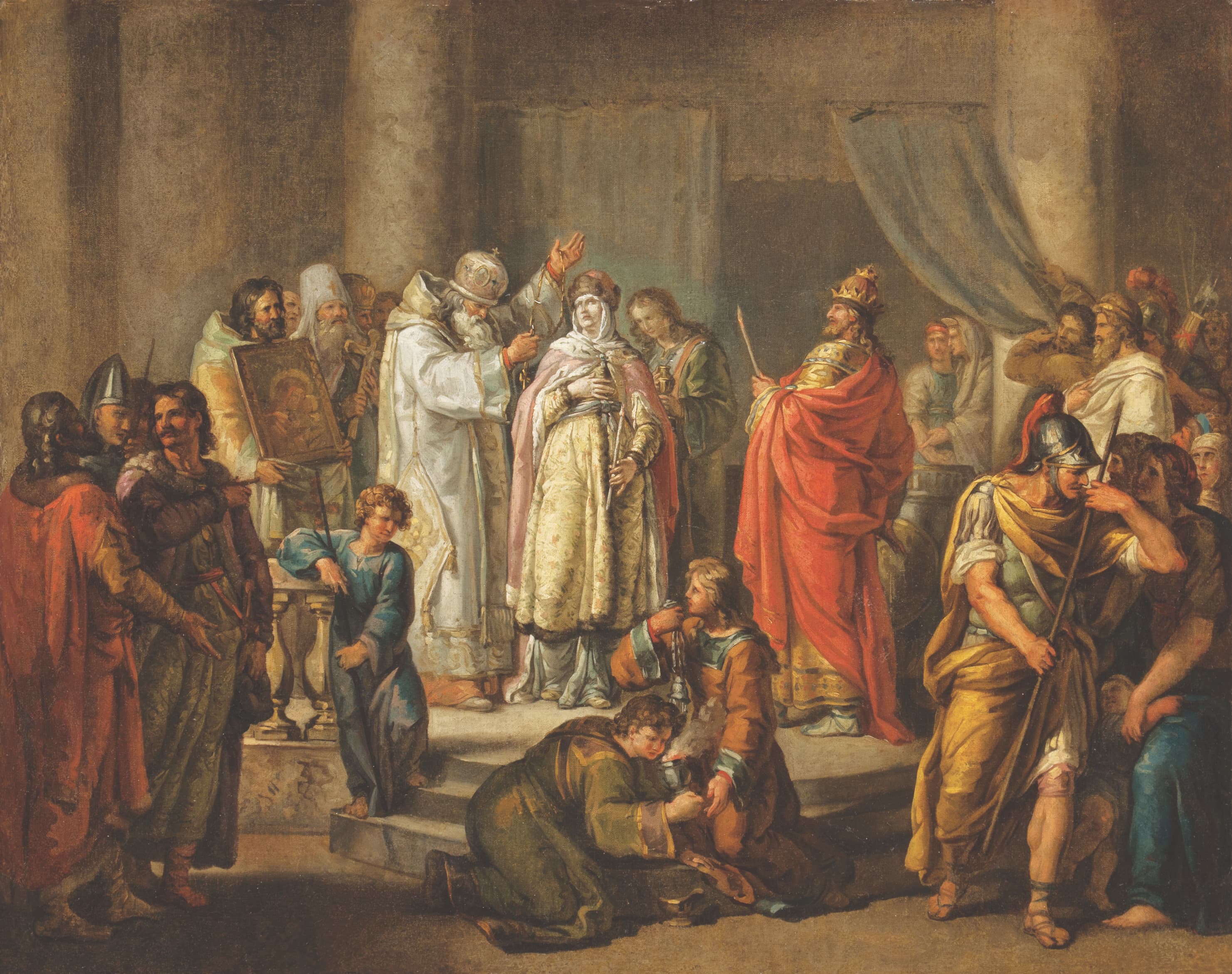
The white-robed patriarch raises one hand over Olga and holds a small gold cross out to her on a chain. In the chronicle she agreed to be baptized only if the emperor and the patriarch did it themselves.
The reception machinery of Constantinople existed to make a visitor feel the exact weight of the empire. Beside the throne stood gilded lions that lashed their tails and roared. Jeweled birds sang in a bronze tree. At the right moment the throne itself rose, emperor and all, toward the ceiling. An Italian envoy saw the machine working in 949 and wrote it down. On a September Wednesday, probably in 957, the same palace received Olga: regent of Kyiv, widow of the murdered Prince Igor, and the first woman to rule the Rus. The Primary Chronicle tells her visit as a comedy with a winner. Constantine VII, struck by her looks and her wit, tells her she is fit to reign in the city beside him. Olga, still a pagan, answers that she will accept baptism only if the emperor and the patriarch perform it themselves. They do, and she is christened Helena. The emperor renews his offer of marriage and walks into the trap. He is her godfather now, and church law forbids a godfather to marry his goddaughter. You have outwitted me, Olga, the emperor says in the chronicle, and sends her home with gold, silver, silks and the official title of daughter. The emperor kept records of his own, and they are drier. His book of ceremonies logs two receptions for Elga, archontissa of Rhosia, which is Greek for Olga, ruler of the Rus. The dates are 9 September and 18 October, and the book prices the whole embassy gift by gift, down to the interpreters. The weekdays fit either 946 or 957, and historians have now disputed the year for a century. One entry cuts deeper: among her people the ledger lists a priest, Gregory. If she traveled with clergy, she may have arrived Christian already, and the famous scene at the font may be Kyiv’s own legend. The protocol book records no marriage proposal of any kind. Constantine already had an empress, named Helena. After the font, Olga carried the same name. Ivan Akimov painted the baptism in 1792 for the Imperial Academy of Arts in Petersburg, where he taught and would later be director. The timing had empire in it. Catherine the Great’s court was openly dreaming of a reconquered Constantinople, and the empress had named her second grandson Constantine on the strength of the dream. Akimov stages what the chronicle wanted: the patriarch’s hand raised over Olga, her own hands crossed on a gold robe, the red-cloaked emperor watching like a man rethinking an offer. The picture now hangs in the Russian Museum. The conversion did not pass to her son. My men will laugh at me, Svyatoslav tells her in the chronicle. In 959 she asked King Otto of Germany for a bishop instead, and the one who finally came lasted about a year before fleeing for his life. She died in 969, 19 years before her grandson Vladimir walked Kyiv into the Dnieper to be baptized. The church ranks her equal to the apostles, a title it has given to few women. Her own last instruction was small and pointed for her century: no funeral feast, no mound. Her priest buried her.