The Machine Age · 14 February 1887
The Protest in Paris
A letter signed by 47 artists begs Paris to tear the tower down
look closer
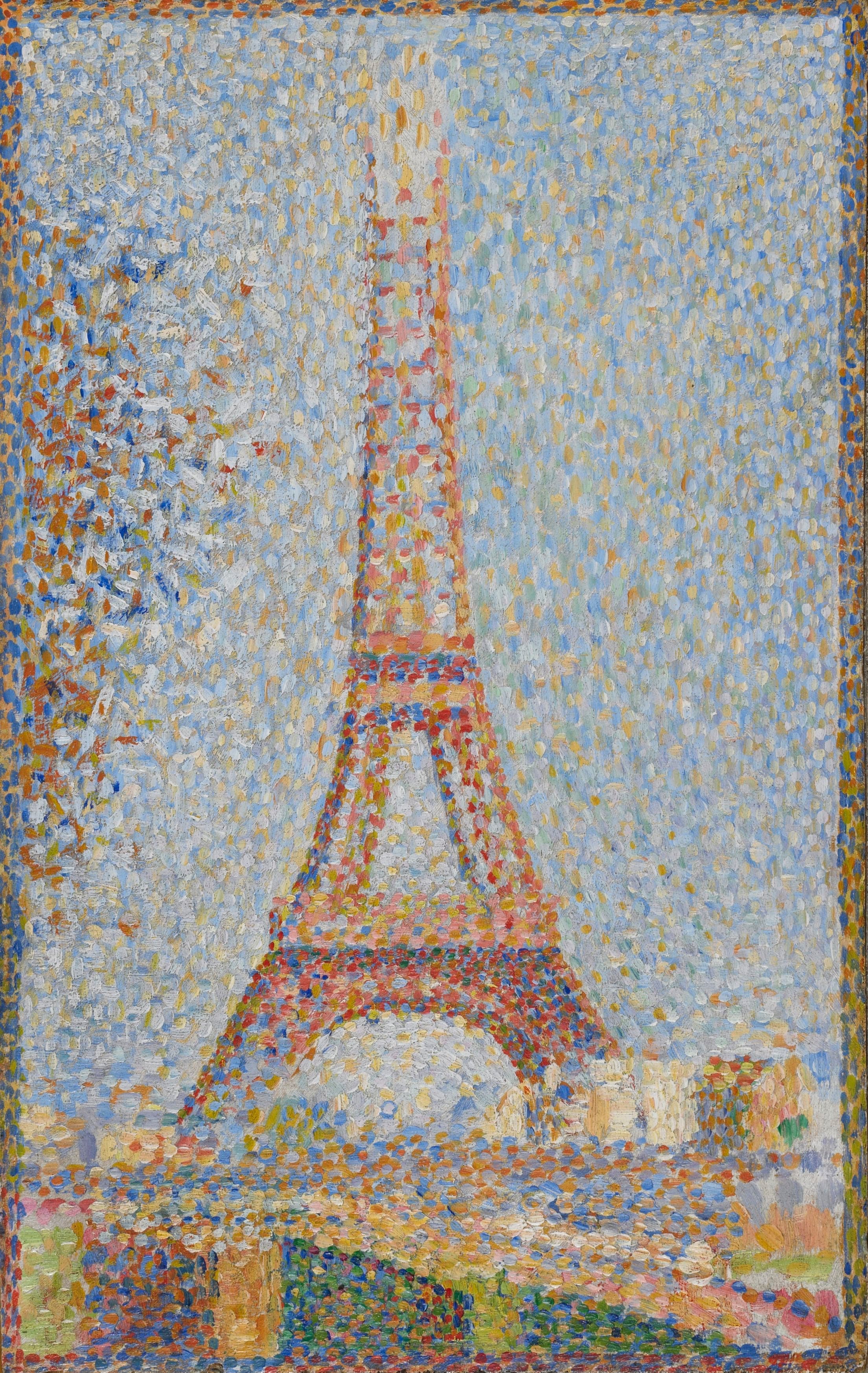
The ironwork climbing to the second platform, made out of separate dots of paint laid side by side. Seurat set orange against blue and left the mixing to the eye of whoever stood in front of it.
On the fourteenth of February, 1887, the newspaper Le Temps printed a letter on its front page. It called the iron thing going up by the Seine a useless and monstrous tower, and demanded it come down before it shamed the city forever. There were 47 signatures, and they were not cranks. The writer Guy de Maupassant signed, and Alexandre Dumas the younger, the composer Charles Gounod, and Charles Garnier, who had built the Paris Opera. They wrote as the guardians of French taste against a factory chimney dressed up as a monument, and they were sure history would side with them. Work had begun 17 days earlier and had not got past the foundations. The tower had 2 years and a great deal of iron still to go. Gustave Eiffel, a bridge engineer, answered them in the same paper with the calm of a man reading a balance sheet. He argued that there was an attraction in the colossal, that the forms of engineering had a beauty of their own, and then he went on building. The tower was the entrance arch to the 1889 world’s fair, held to mark a hundred years since the French Revolution. It climbed to nearly a thousand feet on 18,000 iron parts held by two and a half million rivets. Nothing people had built had ever stood that tall, and it kept the record for 41 years. Maupassant, the story goes, took to eating lunch in the tower’s own restaurant, because it was the one place in Paris where he did not have to look at it. At least one artist went the other way. Georges Seurat built his pictures out of tiny separate dots of pure color. He went to see the tower while it was still going up, and he painted it plainly and warmly, as a thing worth looking at. His panel shows the tower glowing orange and rose against a sky stippled in blue, with nothing apologetic about it. He painted it in the months before the fair opened, while the tower was still not quite finished. The surprise of the painting is its size. For a monument that would top out near a thousand feet, Seurat’s picture is about 6 inches by 9 and a half. He painted it on a wood panel small enough to hold in two hands, and it is kept now in San Francisco. Seurat did not live to be proven right by the crowds. He died in 1891 at 31, of an illness that took him in a few days. The tower is still standing. The letter in Le Temps now reads mostly as a list of people who guessed wrong.