The Renaissance · c. 1495
The Wrong Surface
Leonardo paints a dinner in Milan on the wrong plaster, and it begins to die
look closer
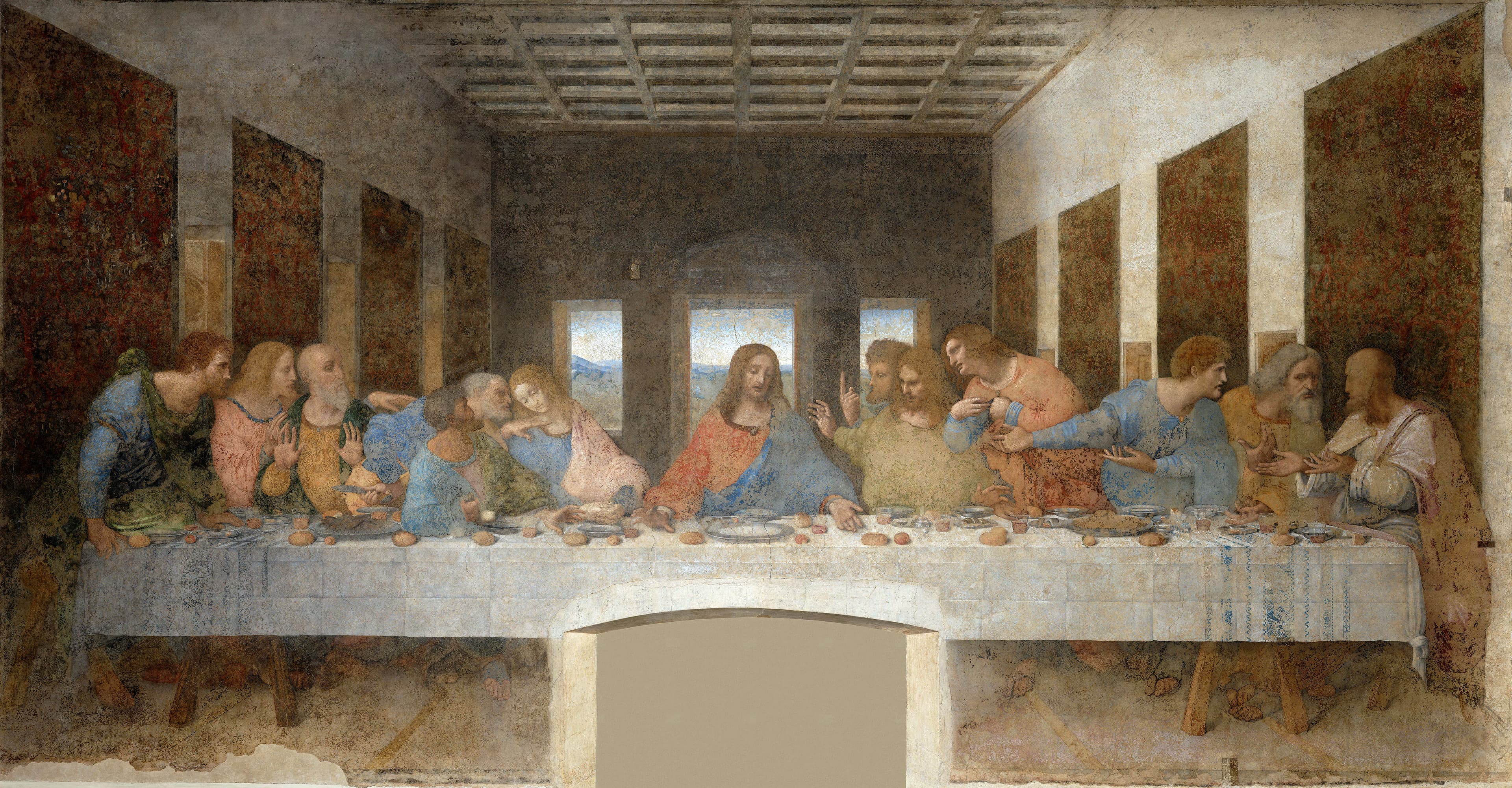
Christ sits at the center against the far doorway. Every painted line of the ceiling and the wall panels meets there. Restorers found a pinhole in the plaster at his right temple, where Leonardo anchored the strings he ruled the room with.
Between 1495 and 1498, on the end wall of a Milan convent’s dining hall, Leonardo da Vinci painted the moment a table stops eating. He chose the instant after Christ has said that one of the 12 men eating with him will hand him over. The sentence travels down the table in a wave. The apostles lean, recoil, point, argue, count themselves. Hands fly up and grab at neighbors. The whole long supper breaks into four knots of three men each, and every group is caught mid-reaction, as if a shout had gone off a half-second before. At the dead center, where all the painted lines of the ceiling and walls converge, is the calm face of the man who spoke. Leonardo built the room to extend the real one. The hall’s monks ate their meals at tables along the side walls, and the painted table sits at the head of them, lit as if by the real windows. The friars dined with the apostles at the far end of their own room. To do it he studied faces for months. He is recorded following men through the streets of Milan for the heads he wanted. The prior of the convent complained to the duke that the painter would stand before the wall for hours without lifting a brush, then leave. The duke, Ludovico Sforza, was paying, and Ludovico let him work. The fault was in the surface. A true fresco is painted fast into wet plaster and binds into the wall as it dries, which fixes the color but forbids second thoughts, and Leonardo could not work fast or without second thoughts. So he invented a method, laying oil and tempera onto dry plaster he had sealed, which let him blend and revise the way he liked. It did not hold. Within his own lifetime the paint began to lift and bloom with damp. A visitor in 1517 found it already starting to decay, and within a few more decades Vasari looked at it and saw little but a blur of stains. The most studied wall in Europe started dying almost as soon as it was finished. After that the room did the rest. In 1652 someone cut a door through the bottom of the wall for the convenience of the kitchen, and took Christ’s feet with it. Napoleon’s soldiers were quartered there and used the hall as a stable. In 1943 a bomb brought the roof down and left the painted wall standing under sandbags in the open weather. It has been rescued, repainted, argued over, and scraped back again more times than anyone can cleanly count. Judas is still there, elbow on the cloth, clutching his little bag, the one face Leonardo pushed back into shadow while the argument breaks over his head.